THEIR
HISTORY
 |
The Tenth Planet
(1966) |
|
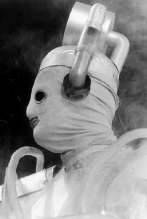
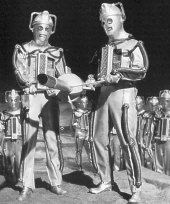
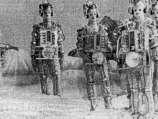
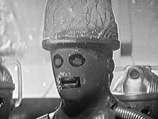
 The first story the Cybermen appeared in was the 1966
story
"The Tenth Planet" where they attempted to capture a Space Tracking Station
at the South Pole. The Cybermen's home world of Mondas -
the 'Tenth Planet' of the
story's title was a mirror image of Earth which had returned
to the Solar System after drifting away to the furthest
reaches of space. Their invasion of
the base is a one of necessity to them. The
Doctor still managed to defeat the Cybermen despite being
in a weakened state, his companion Ben discovering their weakness to intense
radiation
and managed to kill several of them with hand-held uranium
rods, culminating in Mondas exploding after too much energy was absorbed
from Earth. This
story is of course special for a totally different reason
being the last story of the First Doctor's era and so containing, at the
end of episode
four, the famous first regeneration scene, apparently caused
by a combination of old age and The Doctor’s own energy being ‘leeched’ by
Mondas. The first story the Cybermen appeared in was the 1966
story
"The Tenth Planet" where they attempted to capture a Space Tracking Station
at the South Pole. The Cybermen's home world of Mondas -
the 'Tenth Planet' of the
story's title was a mirror image of Earth which had returned
to the Solar System after drifting away to the furthest
reaches of space. Their invasion of
the base is a one of necessity to them. The
Doctor still managed to defeat the Cybermen despite being
in a weakened state, his companion Ben discovering their weakness to intense
radiation
and managed to kill several of them with hand-held uranium
rods, culminating in Mondas exploding after too much energy was absorbed
from Earth. This
story is of course special for a totally different reason
being the last story of the First Doctor's era and so containing, at the
end of episode
four, the famous first regeneration scene, apparently caused
by a combination of old age and The Doctor’s own energy being ‘leeched’ by
Mondas.
 |
Tomb
CyberController
(1967) |
|
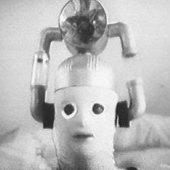
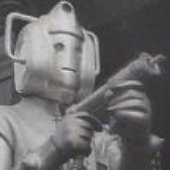
Certainly another invasion of Earth is their purpose when the
Cybermen try to take over a base on the Moon in the 1967 story "The Moonbase".
They are interested in the Moonbase's weather control machine,
the Gravitron. However, The Doctor's companion Polly worked out a chemical
solution that dissolved the plastic units in the Cybermen's chests (Affectionately
nicknamed ‘Cocktail Polly’ by Ben), and The Doctor was able
to use the gravity field of the Gravitron to shoot the Cybermen ships off
into space before they could land.
 |
| Cybermats |
|
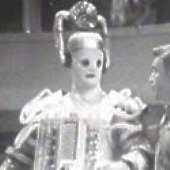
It
was not until the
Second
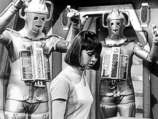
Doctor made arrived on the planet Telos, in the 1967 story "The
Tomb of the Cybermen", that he encountered the real power behind the Cybermen -
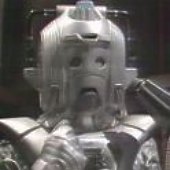
the CyberController. In this story the Cybermen are in hibernation
but members of an archaeology team, who are interested in
locating the whereabouts of the
Cybermen, inadvertently awaken them; however, it turns out
that this was deliberate, as a group called the 'Brotherhood
of Logic', who believed in a purely logical way of life,
wanted the Cybermen's aid
in spreading their beliefs. However, with The Doctor's intervention
the CyberController is apparently destroyed and the Cybermen
are refrozen within
their tombs, the doors electrified to kill anyone who tries
to open them. This story is the first appearance of the
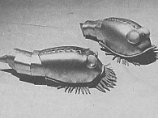
Cybermats - small, mobile machines of undefined origin; it was never revealed
whether they were converted animals or totally mechanical, although later
stories hinted at them being partly alive themselves.
 |
The Wheel in
Space
(1968) |
|
The
Cybermen did not get very far with their attempted take-over of a Space
Station, in the 1968 story "The
Wheel in Space", which they intended
to use as a staging post for another attack of Earth, but
The Doctor destroyed them by enhancing the TARDIS's
Time Vector Generator - the device that
allowed the TARDIS to be bigger inside than it was outside - to such an
extent that the entire fleet was 'crushed'. The Cybermen were again assisted
by the Cybermats, and the Cybermen themselves were seen to hatch from giant
eggs, although these were probably just another form of stasis that the
Cybermen were being kept in until they were ready to launch their attack.
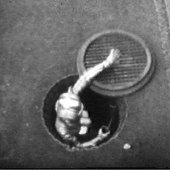
When the TARDIS was damaged by a missile fired from a secret moonbase ("The Invasion"), the Second Doctor found himself joining forces with the fledgling United Nations Intelligence Taskforce (UNIT), helping them investigate the company International Electromatics. Working with UNIT, The Doctor confirmed that International Electromatics' Managing Director, Tobias Vaughn, was helping the Cybermen bring their forces to Earth, hiding their army in the sewers while Vaughn planted secret chips in all of his company's equipment that would broadcast a signal capable of rendering humans unconscious. However, when Vaughn realised that the Cybermen had duped him he changed sides and helped The Doctor defeat the Cybermen's invasion fleet by deploying a transmitter Vaughn had developed to force the Cybermen to experience intense emotions and overload. While Vaughn helped The Doctor destroy the active Cybermen on Earth, the destruction of his office damaged the receiver that the Cybermen were using to amplify their signal and keep the rest of London asleep, while Zoe managed to calculate a missile trajectory that would destroy the formation of Cyberman ships approaching them from their secret moonbase. As they left Earth, the TARDIS crew detected a surviving Cybermen ship fleeing the destruction, and managed to follow the ship's hyperdrive trail back to Isos Two, a colony world that had been converted by the Cybermen to serve as their attack force for the invasion of Earth ("The ISOS Network"). The Doctor, Jamie and Zoe were separated while searching the now-empty colony, The Doctor discovering a security team from Isos that had been sent to investigate its loss while Zoe met and befriended Hilsee, a colonist who had been partially converted into a Cyberman but managed to retain his own identity. Although the security team were helpless against the Cybermen, The Doctor was soon able to determine that the Cybermen had returned to this planet to continue work on a new hyperdrive generator that functioned in a similar manner to a hadron collider, sending a ship rapidly accelerating in an underground circular tube before making the final jump. When The Doctor confronted the Cyber-Controller, Hilsee's ability to resist the Cyber-Controller's attempts to order him gave The Doctor the chance to set the prototype Cyber-ship being used for the experiment to trigger a hyperdrive portal without a destination. Although Hilsee chose to sacrifice himself to set off the ship himself as the automatic control system had been disabled so that the ship could only be piloted manually, setting off the engine in this manner caused an explosion that destroyed the colony and all the Cybermen in it while the TARDIS crew and the security team departed.
NOTE: On a more long-term note, the Cybermens' betrayal of Vaughn drove him to resent all alien life, to the extent that, thanks to a robotic body granting him virtual immortality, he returned in to plague the Seventh Doctor a thousand years later ("Original Sin") in an attempt to acquire the TARDIS to be used as another 'anti-alien' weapon after spending centuries reverse-engineering alien technology for his own ends).
 |
The Invasion
(1968) |
|
Patrick Troughton's Doctor is the one who will always be most
associated with the Cybermen, partly because he appeared with them in more
stories than any of the other Doctors, but also because it was during this
period that the creatures first became established as firm favourites with the
viewers. It is on the strength of these superb Sixties stories that the
Cybermen's reputation rests.
Despite
their popularity it is very surprising that the Cybermen did not feature in
another televised story until some six years later. At the end of the 1968 story
"Invasion" the Cybermen suddenly vanished from The Doctor's life and our
screens. But they were never forgotten. Their only appearances during the
Third
Doctor's era while he was on television was as part of The Doctor's 'nightmare' in "The
Mind of Evil"
(where a still photograph of one was flashed up while The
Doctor was plugged into a machine that made him relive traumatic memories)
and a cameo shot on the screen of Vorg's Miniscope in "Carnival
of Monsters" as one of the other life forms trapped in the Miniscope.
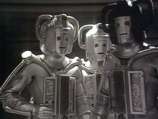
However, the Cybermen have confronted the Third Doctor in audio dramas. When Liz Shaw visited an old friend at Cambridge, The Doctor was sent to investigate missing scientists ("The Blue Tooth"), soon determining that fifteen people had gone missing (including Liz's friend), only three of whom were scientists, but all having recently visited the same dentist. With this common link, The Doctor determined that the dentist was giving his patients fillings with nanite Cybermats, the Cybermats converting their 'hosts' after consuming other material for energy. Tracking the source of the Cybermats to a crashed Cyberman scout ship that had been sent to assess Earth before their last invasion attempt, The Doctor realised that the technology was actually being used by Gareth Arnold, the man who had discovered the ship after it crashed following the deaths of the original crew. Although The Doctor tried to convince Arnold to stop, he was eventually only able to stop Arnold's attempts to convert others by injecting Arnold with an early cure he had developed for the Cybermat infection that dissolved the infected flesh rather than returning it to normal.
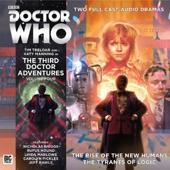 |
The Tyrants of Logic
(Marc Platt) |
|
Some time after this, when The Doctor was attempting to take his new assistant, Jo Grant, for a skiing holiday (in The Third Doctor Adventures - Vol.4 story "The Tyrants of Logic"), the TARDIS materialised on the abandoned mining colony of Port Anvil on the planet Burnt Salt, only a few years after humanity's victory in the Cyber-wars had virtually decimated the Cybermen. Shortly before the TARDIS arrived, a package had been delivered for Proessor Marian Schaeffer, a physician seeking a treatment for her husband Bernard who had been rescued from a Cyberman ship after the conversion process had begun but before it could finish, leaving him in a twisted state where he still had some emotion but was physically limited. The package contained the Leveller, a prototype of the Cybermens' efforts to create a mobile Cyber-Planner, which Marian hoped to trade with the Cybermen for insight into her own efforts to develop a cure for Bernard's condition. Aided by Hollisen Grier, a Cyber-hunter tracking the last of the Cybermen, The Doctor and Jo tried to fight off the weakened Cybermen, but in the process they were infected by 'Cyber-smoke', a new method of Cyber-conversion that involved infecting humanoids with nanites that would make the subjects more psychologically susceptible to willing conversion, at the cost of killing them if they were not converted within a certain time frame. However, by drawing on his link to the nanites, The Doctor was able to communicate with the Leveller and gain information about the operating code of the nanites, combining that insight with Marian's own work to perfect the cure she had been working on, which cured The Doctor and Jo and even restored Bernard to his human state.
 |
Revenge of the
Cybermen
(1975) |
|
During the televised era, the Cybermen finally returned to the screen, appearing in colour for the first time, in 1975, in the Fourth Doctor's story "Revenge
of the Cybermen" they were to be seen for the
first time in colour. Arriving on Nerva Station some years after the CyberWars
of the mid-twenty-sixth century - having been sent back to Nerva by a Time
Ring following their mission to Skaro ("Genesis of the Daleks",
with a brief diversion revealed in "A Device of Death"), the
TARDIS now drifting back through time to join them -, The Doctor, Sarah
Jane Smith, and Harry Sullivan learned that Nerva was currently acting
as a beacon to warn passing ships of Jupiter’s anomalous new moon,
and that a mysterious disease was infecting the station residents. Sarah
was briefly infected by the virus, but The Doctor was able to devise a
cure by using the transmit to remove the infected cells from her body,
also learning that the plague was being transmitted by Cybermats, allowing
The Doctor to realise that the Cybermen were involved. The treacherous
human Kellman, a civilian scientist visiting Nerva, had lured a surviving
group of Cybermen towards the new moon, which was a surviving fragment
of Voga, known as the planet of gold for its abundant quantity of the metal,
having drifted into the solar system after the destruction of its main
body. Kellman was allegedly aiding the Cybermen in their plan to destroy
Voga - the story revealed that gold is lethal to the Cybermen as it clogged
up their respiratory systems due to its non-corrodible nature, making the
Vogans a key enemy of the Cybermen, although later stories have shown the
Cybermen to have varying degrees of vulnerability to the mineral -, while
really luring the Cybermen into a trap so that they could be destroyed
and spare Voga from their threat by trapping them on Nerva and destroying
it with a missile. However, the Fourth Doctor was able to ruin both Kellman's
and the Cybermen's plans by disarming the bombs that the Cybermen would
have used to destroy Voga and reprogramming the Skystriker missile to miss
both Voga and Nerva, the missile destroying the fleeing Cyberman vessel
while The Doctor piloted Nerva to safety despite the Cybermens’ attempt
to turn it into a weapon by loading their remaining bombs onto the station.
 |
Assimilation2
Issue 3 |
|
During
a brief trip to another universe, The Doctor found himself
assisting the crew of Star Trek’s USS Enterprise -
Captain James T. Kirk, Commander Spock, Doctor Leonard ‘Bones’ McCoy,
and Chief Engineer Montgomery Scott - in thwarting a Cybermen
invasion of a Federation archaeological outpost examining
a relay station created by
an unknown race. With the Enterprise crew puzzled at
the team’s lack of emotion, The Doctor was able to help them access
the facility to learn that the survey team have been implanted
with cybernetic earpieces that kept them under control while
the Cybermen prepared to arrive
en masse. The Cybermen were quickly defeated with high-powered
phasers - along with The Doctor’s use of gold taken from the Starfleet
communicators - and the invasion was apparently thwarted,
although this merely delayed
the Cybermens’ plans rather than stopping them.
(NOTE: This encounter was retroactively inserted into The Doctor’s
past when the Cybermen successfully entered the Star Trek universe and
changed history to allow them to form an alliance with the Borg during
the Eleventh Doctor’s era; the Eleventh Doctor claimed in the aftermath
of the crisis that the Cyber-fleet’s destruction would negate the
events that had taken place for all but the crews of the Enterprise-D and the TARDIS, although he would presumably still remember this experience).
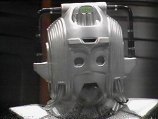
While the Fourth Doctor and Leela prepared for a fishing trip to the planet Krelos, The Doctor’s new robotic companion K9 accidentally discovered an old ‘trap’ that had been set by the Cybermen ("The Fate of Krelos/Return to Telos"). During the Second Doctor’s visit to Telos, Jamie had been exposed to Cyber-nanites that had subsequently infected the TARDIS console room, but the nanites had been left dormant in the TARDIS for centuries until K9’s experiments with the ship’s architectural configuration restored the Second Doctor’s console settings and resulted in him being exposed to the nanites. With Krelos now reliant on a heavily interlinked system of technology, all it took was one nanite-infected robot coming in contact with a microwave to infect the entire technological network on Krelos, allowing the Cybermen to mount a devastating invasion on the planet mere minutes after the initial infection. Fortunately, despite such close calls as The Doctor and Leela going back to see what had caused the planetary devastation, or a Cybermen temporal squad nearly killing the Second Doctor while trying to intercept the Fourth after he went back to the time of his original visit to Telos, The Doctor was able to undo the invasion by using a Krelos robot designed to be remotely controlled by projected brainwaves and a particle vacuum cleaner to clean all the nanite particles off Jamie before he could return to the TARDIS. As the particles were no longer taken into the TARDIS, K9 was never infected with them and the invasion of Krelos was completely erased, with the result that not even The Doctor and Leela remembered what had happened.
 |
Earthshock
(1982) |
|
In the television series itself, however, there was another
gap of some six years before the Cybermen were to return to the screen
again. During a trip to the twenty-sixth century and an investigation of
a cavern full of fossils ("Earthshock"), the Fifth
Doctor discovered
the Cybermen trying to destroy Earth in response to a vast conference being
arranged to discuss an alliance against the Cybermen, the Cybermen fully
aware that they couldn’t prevail against such a force. The cavern
had been intended to be the site where the Cybermen would detonate a bomb
to destroy Earth, but The Doctor, his companions, and a team sent to investigate
the cavern were able to disarm it, subsequently using the TARDIS to trace
the transmissions being sent to the bomb back to their source in the form
of a freighter loaded with a small army of Cybermen, intending to crash
the freighter into Earth to trigger the same explosive effect. Fortunately,
the ship was caught in a temporal anomaly and sent back in time by several
million years as it approached Earth, with the result that the Cybermen
not only failed to destroy humanity, but actually succeeded in creating
it; when it struck Earth, the ship became the 'meteor' that rendered the
dinosaurs extinct. Unfortunately, this resulted in the death of The Doctor's
companion Adric, who had remained on the ship in a foolish attempt to disable
the Cybermen programming locking it on course, not realising the potential
consequences if he'd succeeded, his death thus being nothing but a tragic,
pointless accident. The Cybermen in this story were of a much more futuristic
design, and "Earthshock" succeeded in re-establishing Kit Pedler's
creations as top favourites with the viewers.
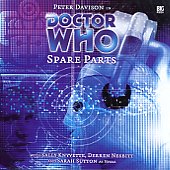 |
Spare Parts
(Marc Platt) |
|
Following
this, The Doctor and Nyssa were
forced to endure the most terrible confrontation with the Cybermen of all;
a confrontation
that revealed the full details
of the Cybermen's origins ("Spare
Parts"). After Mondas left
Earth's solar system, the atmosphere faded and the surface
froze, leaving the population forced to retreat into vast
underground caverns to survive.
Unfortunately, this made actually leaving the caverns and
stepping onto the planet's surface impossible; having spent
so long underground, the
entire population had become, essentially, claustrophobic,
incapable of going onto the surface without collapsing in
screams. With Mondas having
developed a means of steering the planet, the people needed
to go onto the surface in order to start the 'engines' before
they hit a dangerous
special anomaly known as the Cherrybowl Nebula, and thus
the Cyber-process was the only means of ensuring their survival.
However, the process was
not without its problems; for example, it required their
emotions to be removed as it was too traumatic otherwise,
and success rates for Cyber-conversion
were only 19% of the total converted, thus necessitating
continuous conversion. When The Doctor and Nyssa arrived
on Mondas, The Doctor was scanned by
Doctorman
Christine Allan - the scientist responsible for originally
creating the Cybermen - who discovered that The Doctor had
a third lobe in his brain
that controlled his body functions, which gave her the idea
to duplicate the process for the other Cybermen - in other
words, the entire Cyber-race
was based on The Doctor. Resolved to fight this, The Doctor
managed to activate Mondas's engines and render the conversion
process unnecessary,
sending the planet back towards Earth and away from the
Nebula, but, even as he and Nyssa departed, they had no
way of knowing that Cyber-commander
Zheng - the 'leader' of the Cybermen - was still active,
and resolved to continue conversion...
 |
Forty
(Matt Fitton and Sarah Grochala) |
|
From the perspective of the TARDIS crew, their next encounter with the Cybermen took place at two different times, as Nyssa and the just-returned Tegan Jovanka ("Arc of Infinity") found themselves in a temporally complex situation when the Fifth Doctor was possessed by a version of himself from a point just after the confrontation with Monarch ("Four to Doomsday"). The accompanying temporal anomaly caused the TARDIS to travel back along its own time-track back to Telos ("Forty - Secrets of Telos"), materialising on board the ship belonging to Professor Parry's research team just as they were departing after their meeting with the Second Doctor. Initially mistaken for pirates, The Doctor, Tegan and Nyssa soon established that a Cybermat had made its way on board the ship and begun converting the crew into Cybermen, forcing the TARDIS crew and the last few survivors - Professor Parry and ship's engineer Morton - to evacuate on an escape pod. Crash-landing on a dwarf planet where no planet should be, the group discovered Parry's old rival, Professor Vansom, who had determined that this planet was a factory world intended to work in conjunction with Telos, converting victims of the Cyber-army to rebuild their numbers once they started their campaign again. Vansom believed that she had taken control of the conversion factories, using them to convert the local mammals into a limited security force, but the arrival of the Cybermen from the crashed ship reactivated the Cyber-programming in the conversion facilities. Once Vansom was killed by the last Cyberman, The Doctor was able to set the conversion equipment to overload and destroy the factory, leaving Morton and Parry to activate a distress signal and call for help while the TARDIS crew departed, the displaced Fifth Doctor later revealed to be part of a complex plan to stop The Master's alliance with a manifestation of the Nestene Consciousness
("Forty 2 - The Auton Infinity").
 |
Warzone/Conversion
(Guy Adams and Chris Chapman) |
|
The Fifth Doctor’s next encounter with the Cybermen was more chronologically orderly but significantly more traumatic. Now travelling with former slave Marc, The Doctor, Nyssa and Tegan arrived on a planet that was on an extreme ‘fitness kick’ where people were obsessed with being the best version of themselves. As a result of this, the TARDIS crew became caught up in an elaborate marathon, but while Marc enjoyed the tests of strength as they reminded him of witnessing the old gladiator trials, he was unaware that the regular runners were equipped with a device that would alert the race organisers if they were in danger of serious harm, with the result that he was badly injured by one of the obstacles. After The Doctor was able to get himself disqualified from the race, he realised that these people were essentially being brainwashed by Cyber-technology that had crashed on the planet almost a decade ago, the system influencing the people to ‘upgrade’ through cybernetic implants but lacking the strength to convince them all to undergo mass conversion. Unfortunately, The Doctor was unable to warn Tegan about this before she gave consent for Marc to receive medical treatment that was actually a form of Cyber-conversion, augmenting most of his internal systems even if he still looked human. Having convinced the natives of the danger of their system, The Doctor was able to take Marc to a medical centre for treatment before he and Tegan departed to find a Cyberman base. Although another group of Cybermen attacked the research facility while The Doctor was away, Nyssa was able to use the medical nanodrones to attack the invading Cybermen, freezing and destroying them. At the same time, The Doctor was able to access the Cybermen’s primary processing core and determine how to deactivate most of the psychological programming on Marc, allowing him to preserve Marc’s emotions and personality while Marc retained his physical strengths. However, the experience proved so difficult that The Doctor left Marc, Tegan and Nyssa alone for a time to let them recover from the trauma of what had happened in relative peace.
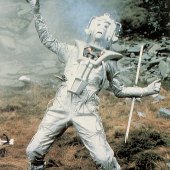 |
The Five Doctors
(1983) |
|
When The Doctor's first five incarnations became caught up in the Game of Rassilon ("The Five Doctors"), the Cybermen were one of the alien races forced to take part in the contest, as two small groups of Cybermen find themselves within the Death Zone on Gallifrey.
A Raston Warrior Robot destroys one team while the other ended up
being slaughtered by The Master's trickery, although his actions
did provide the First Doctor and Tegan
Jovanka with much-needed information
about a trap in the Dark Tower, the Tomb of Rassilon. Even though
they are not central to the main plot their presence leads to some
magnificent action scenes. The Third Doctor was given a chance to confront the Cybermen on television when he witnessed the Raston
Warrior Robot slaughtering the attacking Cybermen as he and Sarah
Jane tried to enter the Dark Tower - which must rate as one of the
best ever cyber battles ever seen in Doctor Who.
While investigating a strange energy ‘spike’ that,
according to an enthusiastic ‘fan’ of The Doctor’s,
accompanied most of his visits to Earth, the Fifth Doctor was reunited
with his old companion Tegan while investigating a spike in 2006
("The
Gathering"), while his current companions Peri and Erimem spent some time in Monte Carlo ("The
Veiled Leopard").
After Tegan was abducted at gunpoint by her friend and employee Katherine
Chambers, a woman who The Doctor would apparently meet in his future
and her past, Katherine revealed that she was trying to save her
brother Nate using Cyber-technology. However, her goals went further
than that; Katherine’s new ‘grand plan’ was to
use Cyber-technology to cure all illnesses, believing that the continued
life was worth the sacrifice of being under the control of technology.
In the end, however, The Doctor and Tegan managed to appeal to all
that was left of the original, human Nate, convincing him and Katherine
that what she was doing was wrong, causing the Nate-Cyberman to activate
the computer’s self-destruct system. Having taken Katherine
away to get help in coping with her past, The Doctor said one last
goodbye to Tegan before departing, reassured that she had enjoyed
her time with him.
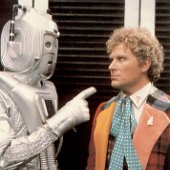 |
Attack of the
Cybermen
(1985) |
|
The Cybermen made another attempt to avert the destruction of
Mondas, their home planet, in the 1985 story "Attack
of the Cybermen". While
chasing an alien in distress the
Sixth
Doctor became embroiled in a plot by the Cybermen to destroy Earth
by using the approaching Halley's Comet, thus averting Mondas's destruction
by destroying Earth before Mondas itself could be destroyed in their encounter
in "The Tenth Planet". The Cybermen took The Doctor back to Telos
where he encountered a recovered and rebuilt CyberController, masterminding
the plan. With the help of Telos' native inhabitants, the Cryons, as well
as a former adversary-turned-ally in the form of the bounty hunter Lytton (Last seen working for the Daleks), The Doctor was able to thwart the Cybermen's
plan and destroy the CyberController. The biggest problem with the Cybermen
in this story is the ease in which they could be shot, blown up and decapitated
which made them seem very vulnerable as never seen before.
 |
The Reaping
(Joseph Lidster) |
|
During
a return visit to Peri's home time to allow her to attend
the funeral of the father of one of her friends ("The
Reaping"), The Doctor and Peri were pitted against a race of
Cybermen from the distant future, who were so weakened by
recent wars that, despite having been in the past for almost
two years, their only convert
was the father of Peri’s friend. The Cyberleader attempted to force
The Doctor to take him back in time to ensure that the human
race would become a new breed of Cybermen, thus averting
Mondas’s
destruction, but The Doctor tricked the damaged Cyberleader
into leaving the TARDIS
on a version of Mondas in the distant past, where the Cyberleader
was taken away by the contemporary Cybermen to be ‘repaired’.
As The Doctor and Peri departed, The Doctor was left unaware
that Peri’s
friends were actually Nate and Katherine (Presumably he
had forgotten about them due to his traumatic regeneration),
and was left unaware of the terrible
fate that awaited the two of them in his future and their
past.
Some time
later, after Peri had departed the TARDIS, The Doctor took
his new companion, Grant
Markham, back to Grant's home planet
of Agora in an attempt to investigate the cause of Grant's
long-standing robophobia ("Killing
Ground"). Discovering that the Cybermen were converting
every male on the planet into a Cyberman - indeed, they’d
been doing so for years - Grant nearly allowed himself to
become partly cybernetic to fight the Cybermen after they
killed his father, but he was convinced not to forsake his
humanity. He also learned that the reason for his robophobia
was due to repressed memories of his escape from Agora,
when his mother was killed by a Cyberman. When the other
members of the anti-Cybermen resistance - known as the Bronze
Knights - were slaughtered by the Cybermen, Grant deactivated
them by turning down the temperature, taking advantage of
them having been designed to be cryogenically frozen. The
Doctor subsequently destroyed the frozen Cybermen using
a cannon on the Cybermen’s stolen Selachian warship,
tricking the Cyber-leader into firing the gun after it had
been reprogrammed to backfire.
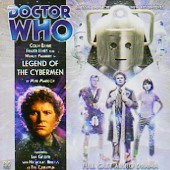 |
Legend of the Cybermen
(Mike Maddox) |
|
The
Sixth Doctor’s next confrontation with the
Cybermen was definitely one of his most memorable, since
it resulted in him technically being reunited with two
of his old companions. During an assault on a space station,
the Cybermen captured the Second Doctor’s old companion
Zoe Heriot, but their subsequent attempt to convert her
into a Cyber-Planner - Zoe’s small size rendering
it impractical to convert her into a true Cyberman - resulted
in them unintentionally breaking the mental blocks the
Time Lords had placed on Zoe’s mind ("The
War Games"), restoring her memories of her travels with
The Doctor while also granting her access to the ship’s
control systems. In a desperate attempt to stop the Cybermen
hurting anyone else, Zoe took the ship into the Land of Fiction, reactivating the central computer to take control
of the fictional constructs and use them against the Cybermen,
only to find herself facing an even greater threat when
the Cybermen began to convert the fictional characters
they defeated into Cybermen. Facing such diverse threats
as Cyber-trolls and Cyber-fairies, with her army being
rapidly reduced to such soldiers as Lieutenant Alice Liddel
(Of "Alice in Wonderland"), General Dracula
- having replaced General Sherlock Holmes after his death
-, and the Artful Dodger, Zoe became aware that the Cybermen
sought control of the Land’s master computer, intending
to use it to destroy human imagination by reversing the
polarity to suppress imagination rather than enhance it,
making all sentient races easy prey for the Cyber-conversion
process. With the Cybermats having been modified to devour
data in order to further disrupt the Land of Fiction -
one of the first casualties of the war being the ‘four-colour
kingdom’ where comic books and superheroes were
located -, and the Cybermen mining ‘ink’ on
the outskirts of the Land in order to provide them with
additional forces, Zoe - having failed to create a fictional
duplicate of The Doctor to assist her - was forced to
send a signal into the real universe to bring the true
Doctor - now in his sixth incarnation - to help her, simultaneously
providing him with a fictional duplicate of Jamie to protect
him while he made his way through the Land ("City
of Spires"). Using the Cybermens’ ‘datamats’ -
data-based Cybermats that functioned in a similar manner
to computer viruses -, The Doctor was able to rewrite
the datamats’ programming so that they could rewrite
notional reality, thus undoing the Cyber-programming and
turn the converted fictional characters back into fiction.
While the fictional characters kept the Cybermen occupied,
The Doctor, Zoe and a fictional duplicate of Zoe - created
by the real Zoe as a distraction - released the ‘datamats’ into
the Cybermen computer systems, disrupting the Cybermens’ grasp
of reality and causing the Cybership to wink out of existence,
along with all the fictionally-converted Cybermen ("Legend
of the Cybermen").
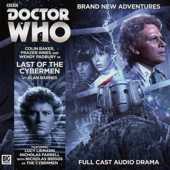 |
Last of the Cybermen
(Alan Barnes) |
|
Interestingly enough, the Sixth Doctor's next encounter with the Cybermen also featured a reunion with Jamie and Zoe, although this was once again a complex one. As part of the latest scheme of the Doctor's old friend-turned-foe The Meddling Monk ("The Time Meddler"), The Monk's latest attempt to manipulate the Doctor's timestream caused the Sixth Doctor to switch places with the Second just as the TARDIS landed on a planet where a small Cyber-platoon was hiding after a devastating defeat in the Cyber-Wars a decade prior ("Last of the Cybermen"). After the three were captured by a historical expedition trying to access the 'tomb' for relics of the Cyber-Wars, Zoe offered their help accessing the relics in exchange for their freedom, but the Sixth Doctor soon realised that the Second had discovered the Citadel's true nature just before the two Doctors switched places; if events had played out with the Second's involvement, he would have left the planet in a panic and the tomb would have gone undisturbed, but due to the Sixth's arrival causing the TARDIS crew to remain as they tried to find a solution, Zennox, the leader of the expedition, was revealed to be a member of the Brotherhood of Logicians ("The Tomb of the Cybermen"), who sought to reactivate the Cyber-Planner located in the citadel to draw in a surviving Cyberman fleet that had become trapped in warp-space during the final battle and needed a signal from the citadel to escape. Restored to the universe, the Cybermen now intended to destroy Earth as the final battle had confirmed that humanity would always resist them, taking The Doctor and Zoe into the warp field and back in time with the fleet while leaving Jamie in the citadel as a hostage. However, the other members of the expedition then revealed to Jamie that they had been present at the battle and thus always knew that The Doctor and Zoe would go back in time. Despite the Cybermen attempting to alter their defeat and save the Super Controller by transferring its mind into Zoe, The Doctor was able to help Zoe shake off the Controller's influence long enough for her to send a signal to the displaced fleet that would cause them to crash into Telos. The crash destroyed the planet and the Cybermen on it before any could escape while The Doctor and Zoe got away in the TARDIS. During their escape, the Sixth Doctor was reminded by Zoe to transmit a signal to the Second Doctor's past TARDIS so that the younger Doctor would visit the moon in the first place and thus be in a position for the Sixth to swap with him and destroy the Cyber-fleet.
 |
Hour of the Cybermen
(Andrew Smith) |
|
The Sixth Doctor's next recorded encounter with the Cybermen led to another reunion with an old friend, although this reunion was fundamentally more tragic than his previous one. Arriving on Earth in 1987, The Doctor learned that Britain was experiencing a serious drought, which was somehow uniquely focused on the country's natural water reserves ("Hour of the Cybermen"). Making contact with his recent UNIT contacts Colonel Lewis Price and Lieutenant Daniel Hopkins, The Doctor soon identified the Cybermen as the parties responsible, also meeting the survivors of a recent Cyber-invasion of the planet Veridia, which had been attacked and most of the survivors converted to boost the Cybermens' ranks for their current invasion of Earth. Working with Riva, one of the surviving Veridians who had been partially converted, and Hopkins, The Doctor was able to locate the Cyber-fleet hiding at the bottom of the sea, using a satellite network to cause the drought, but in the process he realised that Hopkins was a traitor. Having lost his wife and child in a fire a year after he last met The Doctor, Hopkins had been left emotionally traumatised, allying with the Cybermen so that they would convert him and the rest of humanity to escape the pain of human emotion. While sympathetic for Hopkins' loss, The Doctor obviously refused to let him convert Earth, tricking Hopkins into taking him to the main control room so that he could hack the satellite network. The Cybermen had been intending to use it to deprive Earth of water until the human race surrendered to conversion, but The Doctor reprogrammed the system to instead affect key elements of the fuel in the Cybermen ships, causing the entire fleet to explode. Hopkins was taken to a UNIT prison to face charges of treason, but his mental state earned him enough compassion that he was eventually moved to an asylum. Despite The Doctor's hopes, as of 1992 Hopkins still hopes for Cyber-conversion, to the extent that he attempted to provoke a global devastation event in the hope that the Cybermen would return and convert the survivors ("Warlock's Cross").

|
The Trials of a Time Lord
(Rochana Patel, Katharine Armitage and Stewart Pringle) |
|
The Sixth Doctor's last recorded encounter with the Cybermen occurred when he responded to a call for help from his old acquaintance Tiff, which led to him arriving in a labour camp where Cybermen kept humans who would eventually be converted ("The Trials of a Time Lord"). Despite The Doctor's best efforts, Tiff was partially converted into a Cyber-Leader, but The Doctor was further horrified when he learned that this was part of an elaborate television show created by the LudoSphere, a broadcasting company in the far future, with the Cybermen taking part in the experience to convert the 'losers'. While The Doctor was forced to leave Tiff behind as he took part in the wider shows, she returned as the leader of the Cybermen forces when The Doctor discovered that Davros had been brought in to be his adversary in the shows, resulting in Davros tricking The Doctor into helping him call the Daleks to rescue Davros. Despite the obvious odds, The Doctor was able to stop both sides by having his companions Peri and Melanie Bush plant a virus in the networks that would encourage the viewers to stop watching, as well as convince the A.I. monitoring the system to focus on the stories of The Doctor throughout history. Faced with the scale of stories confirming that The Doctor won against such impossible odds, the system forced the Daleks and the Cybermen to destroy themselves, although The Doctor expressed hope that some part of Tiff might have managed to escape.
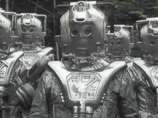
The Seventh Doctor's first encounter with the Cybermen was technically a limited event, as his opponents were basically just scavengers using technology they didn't understand rather than true Cybermen. Several centuries in the future, after the devastating Colonisation Wars ended, a surviving general from the losing side of the war, General Polly Juno, discovered traces of cyber-technology and used it to partially convert herself ("Bad Day in Tinseltown"). When a dimensional anomaly drew the TARDIS to the mining colony of Brightsedge on a distant planet, The Doctor and Mel discovered that the mysterious silver 'tinsel' the natives had discovered in a nearby mine was actually the remnants of Cyber-technology that had been dispersed across the planet after a Cyberman ship crashed there centuries ago while experimenting with stolen dimensional shift technology. General Juno was able to use the tinsel to convert most of the local population into Cybermen, but she assumed that she had greater control of the process then she actually did, ignoring the moments when she acted as a Cyber-leader rather than trying to pursue her own agenda. With The Doctor having accidentally outed himself as an expert on Cybermen, General Juno dragged him to the ship to assist her, but he was able to pass on a message to Mel and local bar owner Mitzi. Using the magnetic drill that was part of the mining operations, Mel and Mitzi were able to set it to generate an electromagnetic pulse that forced the Cyberman ship back into space and triggered the ship's hyperspace engines to activate as the ship exploded, with General Juno on board while The Doctor managed to escape. With Juno's death, those on Brightsedge who had been contaminated by tinsel reverted to normal, while the destruction of the Cyber-ship also created a wormhole to the heart of the galaxy that would make it easier for others to visit the planet in future.
 |
Silver Nemesis
(1988) |
|
The Cybermen's final televised encounter in the classic series was in the 1988 story "Silver Nemesis", where they are planning to invade Earth again in force. This time around, the main action centres on their desire to possess the statue of Lady Peinforte made from the powerful living metal Validium, although they end up being forced into conflict with a group of Nazis attempting to establish the Fourth Reich, the Nazis possessing a piece of the statue to help them control it where the Cybermen had only their advanced technology. The Reich formed a temporary alliance with the Nazis to acquire the Validium over the time-displaced Lady Peinforte, whose use of golden arrows tipped with poison put the Cybermen at a disadvantage that the Reich soldiers would not possess. Naturally, the Cybermen eventually betrayed the Reich having acquired the Validium, but The Doctor then tricked the Cybermen into taking the bow and using it to command the statue. The Doctor had already 'reprogrammed' the statue so that it would subsequently destroy the Cybermen invasion fleet, while The Doctor's companion Ace used her catapult to kill the remaining Earth-bound Cybermen with gold dust.
While investigating
strange occurrences in London during the Blitz, The Doctor and
Ace discovered a group of Cybermen hiding in the sewers ("Illegal
Alien").
The Cybermen in question were a group of sleeper agents sent
back from the future to prepare Earth for an invasion, but damage
in a German raid forced
a small rescue mission to be sent back, and the damaged Cyberman
now required blood to restore the balance between its organic
and mechanical components.
After destroying one of the Cyber-conversion facilities by turning
on the lights during an air raid, a Nazi attempt to gain control
of a group of
dormant Cybermen was averted when the command unit was destroyed,
devastating the entire Cybermen army. The Cyber-technology here
was subsequently used
by a secret government branch who was experimenting with early
cybernetic implants ("Loving
the Alien"), but the group was shut down after
Earth was nearly invaded by an alternate version of itself when
the actions of The Doctor’s old foe George
Limb resulted in the barriers
between alternate worlds breaking down.
 |
The Harvest
(Dan Abnett) |
|
During their
first meeting with their future companion, Thomas Hector ‘Hex’ Schofield
("The
Harvest"), The Doctor and Ace found themselves confronting
another Earth-based group of Cybermen. Hiding in a hospital
that was using experimental medical technology to provide cybernetic
implants to badly-wounded
people, the Cybermen were also undergoing a reversal of the
Cyber-conversion process, allowing themselves to turned back
into human beings to experience
organic life once more. However, their real motives were far
less appealing; by providing medical technology, the Cybermen
had created a conversion factory
right in the heart of London, and, with the Cyber-Leaders coordinating
the situation from there, Earth would be dominated by the Cybermen
in under three weeks. As The Doctor confronted the converted Cyber-Leader,
Ace and
Hex activated a termination protocol that shut down all Cyber-humans,
leaving the factory in ruins as The Doctor and Ace departed
with Hex as
a new companion.
When the TARDIS
was nearly used by a race called the Charrl to travel to Earth
from their home planet ("Birthright"),
it suffered a breakdown that caused it to materialise on Earth
in the early twentieth century. As a result of the attempt,
The Doctor's companions Benny and Ace were left with two different
versions of the main TARDIS shell - now reverted to a simple
police box after the
Time Vector Generator was removed, with Benny holding the main
TVG - while The Doctor took the Jade Pagoda - the TARDIS 'escape
pod' - and found himself
in the Arctic ("Iceberg"),
where an Antarctic tour discovered a group of Cybermen who had
crashed there following their failed attempt
to conquer Earth in 1986. Even worse, the 'tour' was actually
there to test a device
called FLIPback, that had been developed in the event of Earth's
magnetic polarity reversing; FLIPback would reverse the Earth's
magnetic polarity
back to the way it was... but could just as easily cause the
disaster it was designed to avert. Aided by investigative journalist
Ruby Duvall, The
Doctor confronted this small group of Cybermen as they attempted
to convert the people on the Antarctic tour, managing to bring
them off-balance by
reversing Earth's polarity before they were ready for it, allowing
Ruby to destroy the Cyber-army with a cobalt bomb. Ruby briefly
tried to join
The Doctor on his travels, but the Jade Pagoda returned to the
main TARDIS while Ruby was busy collecting her personal effects,
leaving her behind.
 |
Blood and Steel
(James Goss, Rochana Patel, Aaron Lamont and Victoria Saxton) |
|
Some time later, circumstances led to the Seventh Doctor's companion Bernice Summerfield travelling with a version of The Doctor's third incarnation from a parallel universe ("Sympathy for the Devil") who had left his dying universe to join Benny on a new series of travels in her home reality. The two eventually travelled to 1930s Berlin investigating a strange energy signature, which they discovered was evidence of a Cyber invasion when The Doctor found a Cyber-Planner based in the Conformity Institute ("Blood & Steel"). The Doctor was able to disable the Planner and save Benny from being converted into a Cyberman, but an attempt to help Benny relax by taking part in an archaeological dig resulted in them discovering a fake temple intended to lure in potential converts for the Cybermen (The Doctor compared it to the tombs on Telos). The temple was revealed to be a trap for The Doctor himself, infecting him with nanites that could theoretically bypass his usual defences against conversion, but The Doctor was able to resist their programming. The Cybermen attempted to force him to submit by presenting him with various civilians and threatening to convert them if The Doctor didn't give in, but The Doctor refused, aware that the Cybermen would do more damage with him as a Cyber-Planner than if they simply continued their plans for Germany. This effort culminated in the Cybermen threatening to convert Benny once again, but after she was put in the conversion chambers The Doctor revealed that he had modified the cyber-nanites left over from the earlier conversion attempt to actively resist attempts at conversion. Mixing Benny's nanites with the more advanced nanites in his own body, The Doctor was able to turn the conversion process against the Cybermen and disable all Cybermen in Berlin, although he and Benny were left regretful at the lives they hadn't been able to save.
The prime Doctor had another encounter with the Cybermen during a later trip to the planet Tasak, the Seventh Doctor searching for some tea that was said to particularly good on Tasak, most likely due to it still being a steam-powered society. During this visit, The Doctor encountered an undercover operative called Temeter, investigating a strange energy trace from the city of Ardent. Arriving in the city, The Doctor discovered that the ruling
House of Argentia was attempting to arrange a peace conference that would
stabilise the society
after a recent devastating world war, using alien technology
discovered on the sacred island known as the Heart to cure sicknesses with
nanotechnology.
However, after investigating the Heart himself, The Doctor realised
that Tasak was a Cyberman tomb-world, the Cybermen waiting in stasis until
they
were activated. Taking advantage of the fact that the Cybermen’s headquarters
was powered by geothermal energy from the dormant magma chamber
underneath the island, The Doctor and his allies planted explosives
to crack the magma
chamber, unleashing a river of lava that destroyed the dormant
Cybermen before they could be activated. As The Doctor departed,
however, he noted that the Cybermen’s legacy on Tasak would actually
be to create peace due to the advances achieved by use of their technology,
reflecting that it was only how knowledge was used that defined whether
it was good or evil rather than what it began as.
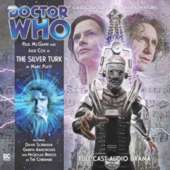 |
The Silver Turk
(Marc Platt) |
|
The Eighth Doctor first encountered the Cybermen in an unexpected location; when taking new
companion Mary Shelly ("The
Company of Friends - Mary’s Story")
to the Viennesse Exposition in 1873 ("The
Silver Turk") as an
early demonstration of the TARDIS’s abilities (Although he had been
intending to take a hop only in space to visit Vienna in Mary’s time),
where The Doctor realised that the mysterious ‘Silver Turk’,
an apparent automaton created by a man named Alfred Stahlbaum, was really
a badly-damaged early Cyberman from Mondas before it reached Earth, crippled
in a horrific accident that took all but one of its arms before it was found
by a forester and purchased by Stahlbaum, Stahlbaum fitting it with a wooden
arm and teaching it how to play games and music. Learning of mysterious
recent disappearances from cab-driver Ernst Bratfisch and Count Rolf Wittenmeier
and his wife Mitzi - Rolf being one of Stahlbaum’s investors while
Mitzi was an old friend of Stahlbaum’s -, the perpetrator being described
as a malformed creature with three arms and a misshapen head, The Doctor
determined that the Turk was too badly damaged to be committing the murders,
its energy supplies being virtually drained. Learning that Stahlbaum had
recovered the Turk while working with the mysterious Doctor Johan Drossel,
now advertising a marionette show at the Exposition, The Doctor and Mary
realised that he was responsible for the disappearances, but Drossel’s
mysterious forces managed to capture Mary and the Countess while The Doctor
attempted to control Drossel. While imprisoned, Mary encountered the killer
in the form of a damaged Cyberman called Gram, this one capable of speech
but with its mechanical components breaking down and its organic components
sick. Talking with Gram, Mary learned that Gram had initially believed that
he was on Mondas, having been on a scoutship that got lost trying to return
home, Drossel keeping Gram as a servant to the point of being ignorant that
Gram could speak. Horrified to learn that Drossel was using Gram to commit
murder to collect eyes so that he could complete his creations - puppet
duplicates capable of speech and independent movement -, Mary inadvertently
revealed the existence of the other Cybermen, prompting Gram to take control
of Drossel’s puppets to find ‘Brem’ just as Drossel prepared
to meet with the Austrian Empress and replace her with his duplicate. Although
Mary believed that she had befriended Gram, he took her as a hostage to
rescue Brem, attempting to recharge by climbing to the top of a nearby cathedral
and allowing himself to be struck by lightning in a storm. His power restored
enough to communicate, Brem suggested that they remove the neuro-generation
unit from his head to serve as a transmitter to send a message to Mondas
to confirm their location, while The Doctor and Mart tried to find Drossel.
Confronting their enemy as he prepared to deploy his puppet army, The Doctor
dismissed Drossel’s ‘perfect world’ as nothing more than
pandering to Drossel’s ego, the puppets having nothing behind them
but blind orders in contrast to The Doctor’s preference for companions
who showed initiative. Realising that Stahlbaum and Drossel had been programmed
with the Cyber-imperative by their captives, Stahlbaum’s mind breaking
down while Drossel was developing his puppets due to a lack of resources
to create actual Cybermen, The Doctor was able to dismantle the puppet of
the Empress, but it took Gram’s attack to give The Doctor the chance
to escape, Gram taking control of Drossel’s puppets and using them
as weapons. With Brem’s neuro-generation unit nearly converted into
the required transmitter, Gram attempted to take The Doctor’s sonic
screwdriver to use it as a power source, but Mary was able to destroy the
screwdriver, leaving Gram and Drossel - who had partially converted himself
into a puppet - to collapse as their systems finally succumbed to the damage,
The Doctor and Mary burning the puppets to destroy all trace of Gram’s
presence.
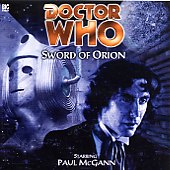 |
Sword of Orion
(Nicholas Briggs) |
|
During the Eighth Doctor's first trip with new companion Charley
Pollard, he materialised
in the far future during the Orion War ("Sword
of Orion"),
a war between humans and androids that began when humanity made
its androids too realistic, to the extent that the androids
demanded equal rights from the authorities, going to war when
they were refused. When the TARDIS
accidentally materialised on a spaceship where one of the crew
had been murdered by a being of great
strength, The Doctor discovered that the power problems were
because of a Cybermat that had infiltrated the ship, and subsequently
discovered that the ship had deliberately made contact with
a ship full of dormant Cybermen; the ship's captain, Deeva,
was an Earth Security operative sent to attempt to form an alliance
with the Cybermen against the androids. As the entire crew were
converted, Deeva was revealed to be an android double agent
seeking the Cyber conversion process to convert humans to fight
for the androids, but, as an ion storm struck the ship, Deeva,
changed by her time with The Doctor and Charley, sacrificed
herself to ensure the destruction of the Cybermen, giving The
Doctor and Charley time to retreat to the TARDIS.
 |
Audacity
(Tim Foley and Lisa McMullin) |
|
When The Doctor briefly left Charley at a monastery in Tibet, he and his new companion Lady Audacity Montague ("The Devouring") arrived on the Aurum, a space station made of solid gold, which The Doctor realised was a key research facility in the Cyber-Wars ("The Great Cyber-Wars"). When unknown parties attempted to abduct the scientist Oberon Fix, Audacity was captured by the would-be assassin while The Doctor was mistaken for the assassin's accomplice. The Doctor was able to win a meeting with Fix by demonstrating mathematic proofs that hadn't been discovered yet, as he was intrigued by the space station's nature, aware of the distinction between the Cybermen being vulnerable to gold and them actually being afraid of it. Audacity's captors were able to convince them to help her by revealing that they were objecting to the working conditions on the nearby planet Voga ("Revenge of the Cybermen"), but The Doctor realised that the rebels were unwitting allies of the Cybermen (only one of the rebels knew that the Cybermen were assisting them as the rest naturally rejected that idea). The infiltration was further aided when the Aurum's security chief was revealed to have a Cybermat in her artificial leg; she lost the original in a campaign against the Cybermen and the replacement was installed in the field. With the Aurum staff having been knocked out, The Doctor made his way back to Oberon's lab, where he realised that a gold statue in the lab was actually a Cyberman covered in gold, tortured as part of the research into their weaknesses. The Doctor realised that the Cybermen's weakness to gold was essentially a fiction at this time; the Glitter Guns worked by brute force rather than the Cybermen being particularly weak to gold in particular, with The Doctor speculating that gold was just used as the ammunition because it looked flashy. However, Oberon's planned golden pulse would essentially create this weakness in the Cybermen, albeit at the cost of contaminating the gold in the blast radius that included the gold in the bodies of the Vogons on the planet. The Doctor initially tried to find a way to spare the Vogons from this fate, hoping that if enough Vogons moved underground the species could survive on a larger scale, but ultimately the threat became too great when he realised that the Cyber-leader was a converted time traveller. The last Vogon on the station ultimately set off the weapon himself, with The Doctor spending the next week helping the surviving Vogons cope with the mass deaths on their planet while Audacity healed from her own injuries.
Some time after this, following Charley’s attempt to leave
The Doctor following the death of fellow companion C’rizz,
The Doctor and Charley were forced to investigate a temporal ‘hump’ -
swelling in space/time caused by pressure in the event ridges
- that had thrown them off course, causing them to land in Singapore
in 2008 rather than 1931. Tracking the hump to the SS Batavia
- a ship that was marooned in the harbour in 1942, - The Doctor
and Charley swiftly learned that it contained a small group
of Cybermen that had attacked it in 1942 after an experimental
generator designed to help them avoid detection transferred
the ship to the year 500 000 - by which point Earth had been
abandoned, - the generator being reprogrammed based on signals
that were sent by the Cybermen into the past. Tracking the ship
to its new location, The Doctor was horrified to learn that
the Cybermen intended to establish cybernetic conversion facilities
in 1942. With the Cyber-Planner’s body damaged due to
temporal corrosion, the Planner transferred its intellect into
Charley’s body moments before The Doctor transferred the
Batavia back to 1942, allowing the ship to be hit by torpedoes
to preserve history. Due to Charley’s brain being incapable
of holding the Cyber-Planner, the Planner attempted to transfer
itself into The Doctor, but The Doctor rewired the transmission
and restored Charley to normal. Unfortunately, at the last minute
a deranged and partly converted treasure-hunter who had sought
the Batavia’s supposed gold reserves attacked The Doctor,
forcing The Doctor to take him to the future to acquire Cyber-technology
only to be subsequently killed by the remaining Cybermen. Although
Charley managed to destroy the ship, the subsequent disintegration
caused the TARDIS’s HADS to activate, resulting in the
TARDIS dematerialising, with The Doctor’s recent memories
so scrambled that he was unable to recall what had precisely
happened to Charley (Who went on to be rescued by the Sixth
Doctor, leaving her in an awkward position as she was thus forced
to prevent herself from letting this Doctor know anything about
her time with his future self).
Some time after
Charley’s departure, The Doctor, while searching for new
companion Lucie Miller after she had been abducted by the mysterious
Headhunter - who had been tracking Lucie throughout time since
she joined The Doctor on his travels - discovered that the Headhunter
had taken her to an alien war machine on a distant planet disguised
as an office, the ‘office manager’ Hubert brainwashing
humans to run war machines that he provided to alien races currently
at war… with the pre-Telos Cybermen being the opponents
of his latest ‘clients’. After Hubert was convinced
to side with the Cybermen, The Doctor and Lucie discovered that
the Time Lord Celestial Intervention Agency - a group of Time
Lords who interfered with affairs of the universe that might
endanger the timeline or Time Lord supremacy of the Time Vortex
- had deliberately engineered the war in an attempt to destroy
the Cybermen. Using the Agency’s Quantum Crystaliser -
a device which altered possible futures to create the best possible
outcome for the user - The Doctor reprogrammed the Crystaliser
to increase its range while ensuring its goal of defeating the
Cybermen, causing all the Cybermen on the planet to be killed
before the device itself was rendered useless when a Cyberman
attempted to activate it.
 |
War Doctor Rises - Cybergene
(Jonathan Morris) |
|
During the devastating Time War, the Eighth Doctor's regeneration was specifically intended to turn him into the War Doctor, an incarnation specifically focused on fighting the Daleks rather than The Doctor's usual travels ("The Night of The Doctor"). From available evidence, the Daleks took the Cybermen out of the picture by infecting the Cyber-networks with a virus that disabled the emotional inhibitors, forcing the Cybermen to experience the terror of their conditions. The Time Lords were able to find Sepulchre, the dark matter asteroid where the Cybermen had put themselves in stasis until their systems could beat the virus, and extract a Cybergene from one of the dormant Cybermen, giving the Time Lords access to all the data necessary to create new Cybermen ("War Doctor Rises - Cybergene"). The goal of this operation was to essentially use the Cybermen to create 'firebreaks' in the war, discreetly providing data on the creation of Cyber-technology to key figures on strategically important planets so that these worlds would create Cybermen, manipulating the planets' development so that the use of Cyber-technology would appear 'natural', whether soldiers caught in a war or environmental collapse. This would result in those worlds being destroyed as the Cybermen consumed all local resources, but this was considered an acceptable alternative to those worlds falling to the Daleks and their resources subsequently being consumed anyway. The Daleks discreetly directed The Doctor's TARDIS to one of the worlds where the Time Lords were carrying out this experiment, where he made contact with Neska, one of the key scientists in the local Cyberman project, with her commanding officer Jellick being a Time Lord infiltrator. Having determined the Time Lords' plan to harness Cyber-technology, The Doctor departed with Neska and visited another world to confirm the full extent of the Time Lords' plan. He then followed the available data to Sepulchre, infiltrating the original mission to acquire the Cyber-gene. While Neska wanted The Doctor to stop the Time Lords acquiring Cyber-technology in the first place by sabotaging the data on the Cyber-gene, The Doctor was obviously unwilling to change history in that manner. However, he was able to use the opportunity to plant a dormant version of the Dalek virus in the data downloaded by the Time Lords; while the Time Lord-inspired Cybermen believed they were immune to the Dalek virus, this was essentially because they were already infected with it. When The Doctor activated the virus, this destroyed all active Cyber-forces, although Neska was sadly another casualty based on the cyber-gene that had been planted in her own brain.
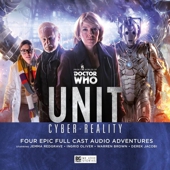 |
UNIT: Cyber-Reality
(Matt Fitton and Guy Adams) |
|
While the Time Lords as a whole did not encounter the Cybermen again during the War, the War Master became involved in a confrontation with the Cybermen when he attempted to escape the War. Outside of the Time War, UNIT - currently led by The Brigadier's daughter Kate Stewart ("The Power of Three") - were investigating the Auctioneers, a group selling alien technology on the black market. This led to them retrieving virtual reality equipment that allowed them to access alternate realities, but the equipment turned out to be a trap set by the Cybermen of another reality, allowing them to essentially convert those using the headsets by remote to set up a dimensional gate to allow Cybermen to cross realities on a larger scale ("UNIT: Cyber-Reality"). The headsets allowed the Cybermen to convert Kate's senior officers Osgood, Colonel Shindi and Lieutenant Sam Bishop, but Captain Josh Carter was able to warn Kate what was happening as his part-Auton physiology made him immune to the conversion. Kate was nearly forced to trigger the self-destruct of her main base to stop the Cybermen expanding further, but this plan was interrupted when the War Master arrived in the base, having become trapped in another reality at some point and needing equipment from UNIT's archives to repair his TARDIS. With the Cybermen having captured The Master's TARDIS, The Master and Kate had to work together to stop the invasion, The Master helping Kate retrieve equipment from the Auctioneers as the brainwashed Osgood created an app to facilitate mass virtual conversion. Having released Kate's UNIT colleagues with an emotion gun after killing most of the Auctioneers, The Master was almost converted himself, but his strength of will allowed him to trick the Cybermen into drawing on other realities for power, only to destroy themselves when they drew on realities that were in some way hostile to Cybermen (either they had just been defeated in those realities or environmental conditions meant that the Cybermen had never manifested in the first place). Although Kate naturally wanted The Master arrested, he forced her to let him go by threatening to let the residual effects of the Cyber-conversion burn out the remaining victims; once in his TARDIS, The Master channelled that energy into his ship's engines to return to the War while leaving the humans alive.
 |
Monsters in Metropolis
(John Dorney) |
|
Once the Time War had concluded with the apparent complete destruction of both the Daleks and the Time Lords ("The Day of The Doctor"), the newly-regenerated Ninth Doctor tried to visit the filming of classic science-fiction film Metropolis in 1925 ("Monsters in Metropolis"). However, The Doctor was shocked to learn that the 'Machine Man' from the historical film had been replaced by a figure he immediately recognised as a damaged Cyberman. Talking with Dieter Jovanovic, The Doctor learned that Dieter had found the Cyberman in a junkyard and managed to reactivate it, although The Doctor was initially unable to determine how and why this Cyberman had come to this particular era in the first place. When he confronted the Cyberman, The Doctor initially assumed that it was a threat in its own right, but soon realised that whatever had happened to it before the Cyberman arrived in the junkyard had damaged enough of its internal circuitry that its original identity was trying to assert itself, to the extent that it felt pain and didn't want to kill others. Unfortunately, The Doctor also realised that Dieter was attempting to use the Cyberman as a weapon himself, as Dieter resented how the current pursuit of 'peace' was destroying the German economy and rejected the message of peace the film was trying to promote. Despite Dieter's control, the Cyberman was able to resist his order to kill The Doctor, and instead strangled Dieter into unconsciousness. Leaving Dieter to be arrested, The Doctor showed the Cyberman the completed film, acknowledging that while the film itself wouldn't attract much interest upon its release, its message would become more powerful in future. Despite The Doctor offering to take the Cyberman somewhere it could find peace, the Cyberman instead asked for The Doctor to kill it so that it couldn't be a threat to anyone else.
Intending to visit his old friend Brigadier Lethbridge-Stewart to cheer himself up ("Way of the Burryman"), The Doctor found The Brigadier investigating odd events on a military research base in the River Forth in 2004. With the aid of soldier Sam Bishop, The Doctor and The Brigadier discovered that the Forth Rail Bridge was generating intense emotion, which they speculated had been imprinted on it by the workers during its construction. The Doctor attempted to use alien technology to essentially 'record and erase' the emotions from the bridge so that they wouldn't be a danger to anyone else, but this resulted in an entire army of Cybermen being reactivated, led by an early Cyberman that called itself Creel. The Doctor realised that Creel was the other member of the two-Cyberman expeditionary team that his previous associate had been part of, the two having been separated when their ship was struck by a temporal anomaly. Arriving when the bridge was under construction, Creel had managed to use contemporary resources to convert most of the workers who had died making the bridge into primitive Cybermen, but he had been forced to keep them dormant as he lacked the means to purge them of their emotions or install proper Cyber-programming into them. During Creel's campaign, Katie, Sam's girlfriend, was converted into a Cyber-Planner so that she would retain her knowledge of the area, but this gave her the authority to have Creel destroyed as a defective model and take command of the Cybermen herself. Using the device he had previously used to 'download' the emotion and memory from the bridge, The Doctor was able to upload a copy of Katie's pre-conversion personality and memories to the Cyber-Planner, restoring enough of her humanity for Katie to resist the programming and order most of the Cybermen to destroy themselves.
 |
| Rise of the Cybermen /
The Age of Steel (2006) |
|
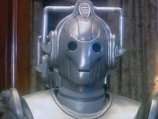
After The Doctor's next regeneration, the Tenth Doctor had an unconventional encounter with a completely new group of Cybermen. While travelling with Rose Tyler and Mickey Smith, the TARDIS fell into an alternate version of Earth, with The Doctor and Rose visiting the mansion home of Pete and Jackie Tyler (the alternate versions of Rose's parents) while Mickey visited the still-living alternate version of his grandmother. However, their visits were swiftly complicated when Mickey was captured by his other self while the Tyler mansion was attacked by the newly-created Cybermen of that universe. Created
by the dying genius John Lumic,
who sought a means to cure himself of his illness, these Cybermen
were regarded by Lumic as the
next necessary stage in human evolution, and he was determined
to 'upgrade' the entire population of Earth by force. While
The Doctor kept the Cyber-Controller Lumic occupied, Mickey
managed to find the code that would deactivate the emotional
inhibitor chip, thus causing the Cybermen to self-destruct as
they were finally capable of realising the horror of what they
had become.
 |
| Army of Ghosts /
Doomsday (2006) |
|
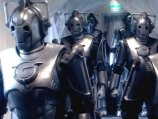
A couple of
years after this confrontation, the surviving Cybermen of that
world managed to use an experiment being conducted by
the Torchwood institute of this reality to cross over into this
universe, following the trail of a 'Void ship' - a ship designed
to 'hide' in the void between universes ("Army
of Ghosts/Doomsday"). However, once the Cybermen
had crossed over, it was discovered that the ship was created
by the last four
Daleks in existence - the Cult of Skaro, a secret order created
to think like the enemy and develop new ways of killing-, resulting
in a moment that Doctor Who fans had longed for ever
since the two species became the nightmares they are today;
a war between
the Daleks and the Cybermen. Initially, the Cybermen had the
advantage of numbers - it was five million Cybermen to only
four Daleks, after all - but the Daleks' advanced weapons gave
them the edge regardless, and after the Daleks managed to open
a Time Lord prison capsule, the Cybermen lost even the advantage
of numbers, with millions of Daleks filling the skies of London.
However, as both species had passed through the void, The Doctor
was able to defeat both of them by opening the rift into the
Void, thus drawing both species into the ‘null space’ between
universes due to them having absorbed 'background radiation'
when they passed through the void. With the rift open, both
species were pulled into the void, essentially being trapped
in a dimension that has become known as ‘Hell’ by
some people.
However, some
Cybermen - those who had been converted on this side of the
rift - remained behind regardless of The Doctor's
efforts. One of these - Lisa Hallet - was rescued by her boyfriend,
Ianto Jones, who went on to work at Torchwood Three in Cardiff,
under the command of the Ninth
Doctor's
old companion Captain Jack Harkness. He attempted to restore Lisa to
her original human form with
the aid of a cybernetics expert, convinced that she was still
human underneath her upgrades, but when awakened, Lisa reverted
to her Cyberman personality and attempted to convert the Torchwood
base into the focus for her new Cyberman army. She nearly killed
Jack (His immortality after being resurrected by Rose following
"The
Parting of the Ways" being the only thing that saved
him), but, seeing how far Ianto had gone to protect her, Lisa
transplanted
her brain into the body of a pizza delivery girl so they could
be together. Clearly insane, and still claiming they both could
be upgraded, Lisa's new body was shot and killed by the rest
of the Torchwood team (Interestingly enough, it was implied
that Jack has experience with the 'original' Cybermen when he
discussed the damage that the Cybermen could do if Lisa was
allowed to exist, although this was never expressly stated).
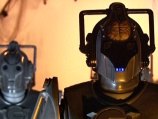
While travelling
with Martha Jones, The Doctor discovered another group of Cybermen
who had been converted on this side of the dimensional rift
and thus remained after the others were sucked into the Void.
Although these Cybermen attempted to use alien technology -
presumably salvaged from Torchwood - to open the Void and release
their army once again, their initial experiments simply resulted
in sending them randomly teleporting around London, forcing
them to try and find The Doctor to force him to help them. With
Martha having tracked them down to their headquarters at the
Millennium Dome, The Doctor led a small army unit to confront
the Cybermen, the soldiers destroying five of the Cybermen before
The Doctor was able to destroy them by opening a space-time
portal to the last location where he and Martha had been prior
to their return to London (Which, since the TARDIS had previously
been visiting prehistoric times, meant that the Cybermen were
torn apart by a T-Rex).
 |
| The Next Doctor (2008) |
|
Another
group of Cybermen eventually managed to escape the Void when
Davros’s attempts to trigger the Reality Bomb ("The Stolen Earth/Journey's End") destabilised the dimensional barriers, allowing
a small group of Cybermen to escape the Void with stolen Dalek
technology, including various ‘infostamps’ that
contained all the information they would require to survive
in this universe. Arriving in London in 1851, the Cybermen recruited
the aid of workhouse matron Miss Mercy Hartigan to gather children
to use as a work force to construct a ‘Cyber-King’,
a gigantic mobile Cyber-conversion factory that simultaneously
acted as a war machine; their lack of resources necessitated
them using more subtle methods than usual. However, their attempts
were thwarted when the Tenth Doctor discovered their presence
in London, allying himself with Jackson Lake, a mathematics
professor who had been exposed to an infostamp containing information
about The Doctor when he discovered the Cybermen in his basement;
the trauma of witnessing the Cybermen kill his wife and abduct
his son resulted in Jackson briefly believing that he was The
Doctor before the genuine article arrived, causing him to seek
information about the Cybermen while trying to defend London
from their attack. Despite the shock of learning that his identity
was a lie when The Doctor deduced what had happened, Lake nevertheless
aided The Doctor in fighting the Cybermen, using the infostamps
as weapons by damaging their power sources and using them to
overload the Cybermen while The Doctor evacuated the children
from the Cyber-King before it activated. Although the Cybermen
attempted to convert Miss Hartigan to become the Cyber-King,
her mind proved so powerful that she came through the conversion
process with emotions intact, although her lust for power and
respect meant that she continued to lead the Cyber-King against
London regardless. Using a hot-air balloon Jackson had developed
as his own TARDIS - Tethered Aerial Release Developed In Style
- The Doctor flew up to confront Miss Hartigan as she sat in
the chest of the Cyber-King, subsequently using an infostamp
to break through both the Cyber-programming and her rage and
anger, forcing her to truly look at what she had become. Screaming
in horror at the realisation of her true nature, Miss Hartigan
triggered the Cybermens’ self-destruct before destroying
herself, The Doctor subsequently using the vortex generator
the Cybermen had used to escape the Void to send the Cyber-King
into the Time Vortex, where it would disintegrate harmlessly.
 |
Out of Time 2 - The Gates of Hell
(David Llewellyn) |
|
Later in his life, the Tenth Doctor faced a new Cybermen invasion of Earth using a particularly long-term plan that required the aid of his own fifth incarnation to deal with the problem ("Out of Time 2 - The Gates of Hell"). While the Tenth Doctor visited Paris in 1944, he was caught up in a temporal anomaly as history was rewritten to a world where the Cybermen had conquered Earth almost a century ago, and was subsequently able to trace a clue to that disruption to a stasis chamber in the catacombs under Paris that held his fifth incarnation, who had been captured in 1809. Working together to trace the divergence, the two Doctors determined that the Cybermen had been converting refugees from the French revolution in 1809 with the aid of Joseph Delon, who had been running a tour of the catacombs in 1809, and subsequently worked with Time Agent Tina Drake to travel back to 1769 to contact Joseph's younger self in his first encounter with the Cybermen. The Cybermen intended to use Joseph as their agent to establish a presence in the past, but the presence of the Doctors provoked the Cybermen to kill Joseph's father before they had properly programmed him, driving Joseph to help the Doctors oppose his former masters. With Joseph helping to distract the Cybermen, Tina and the Doctors were able to sabotage the time-travel equipment so that the Cyber-Leader was banished back to Earth's distant past, long before there were any humans to convert or technology that could help the Leader get back to its fleet.
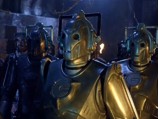 |
| The Pandorica Opens/The
Big Bang (2010) |
|
The Eleventh
Doctor’s first encounter with the Cybermen occurred in
the Arctic, when he and his companion Amy Pond responded to
a distress signal, discovering an Arctic base where a geological
expedition had discovered a long-dormant Cyber-ship, the reactivated
Cybermats infecting the expedition members with a nanovirus
that turned them into ‘Cyberslaves’ ("Blood
of the Cybermen"). Although The Doctor managed to devise
a cure for the virus after examining one of the Cybermats, Amy
was captured by the Cyberleader, forcing The Doctor to begin
the Cybermen revival process or allow Amy to be converted into
a Cyberman herself. Fortunately, The Doctor managed to escape
the Cyberleader and rescue Amy before reversing the revival
process, although he, Amy, and Chisholm - the last surviving
member of the expedition - then had to escape the base before
the Cybership self-destructed.
The Eleventh
Doctor faced the Cybermen again when they joined forces with
his other enemies in a vast Alliance to trap him in the Pandorica
- a legendary prison that had been spoken of in myth, created
specifically to hold The Doctor - after they became convinced
that he would be responsible for a temporal explosion that triggered
the creation of cracks in the universe after the TARDIS exploded,
unaware that the explosion had already taken place when his
future companion River Song was piloting the ship. With the
collapse of history, the various races in the Alliance were
all erased from existence, leaving only statues of themselves
gathered around the Pandorica as ‘after-images’,
Earth the last fragment of time left in the universe thanks
to the exploding TARDIS putting itself in a time loop at the
moment of its destruction to act as a substitute sun for Earth.
With The Doctor having taken the Pandorica into the TARDIS explosion,
using the TARDIS itself as a power source to transmit the remaining
atoms of the true universe stored within the Pandorica across
all of time and space in a second explosion that restored the
history of the universe, the Alliance was erased and history
restored.
Although they
were not involved in the central attack, when the Eleventh Doctor
and Rory were tracking the kidnapped Amy Pond ("A Good Man Goes to War"),
The Doctor and Rory confronted the Twelfth Cyber-Legion for
information about Amy’s captors after determining that
she was in a location that was regularly monitored by the Cyber-Legion,
Rory donning his Auton counterpart’s
Roman costume to ask the Cyber-Leader for the information they
sought while The Doctor destroyed some of their ships to prove
how serious he was.
 |
Assimilation2
Issue 5 |
|
Following
a brief visit to Ancient Egypt to capture an alien prisoner
who had escaped from a multi-dimensional cell ("Star Trek:
The Next Generation/Doctor Who: Assimilation2"),
The Doctor, Amy and Rory found themselves in another universe
- the world
of Star Trek, to be exact -, arriving on the starship USS
Enterprise (NCC-1701-D) in time to discover
that the Cybermen had arrived
en masse in this universe, and had allied with another
cybernetic race known as the Borg, both sides sharing a similar
goal of
conquest while converting other races into their own kind (Although
the Borg possessed a collective consciousness and were driven
to expand in the pursuit of their goal of perfection where the
Cybermen retained individual minds programmed towards conquest
and conversion). Suddenly recalling his fourth incarnation’s
brief encounter with the Cybermen and Kirk’s Enterprise,
The Doctor realised that the Cybermen had changed history to
enter this universe and ally with the Borg, history changing
in both worlds so that The Doctor now recalled visits to this
reality that hadn’t happened before (A shift in recollection
shared by Guinan, the mysterious long-lived bartender of the
Enterprise who had previously shown an awareness of
when history was changed, who noted that she remembered meeting
The Doctor
while also acknowledging that they shouldn’t remember
each other). Having convinced Captain Jean-Luc Picard to assist
the Borg against the Cybermen, The Doctor learned that the two
races had already recognised that each side would attempt to
be dominant in the alliance, with his arrival tipping the scales
and prompting the Cybermen to accelerate their plans to prevent
him from interfering, overriding the Borg Executive Library
program and eliminating most of the Collective’s higher
decision-making ability. With the Collective mostly inert, the
Cyberfleet set course for the Borg homeworld to completely overwhelm
the Collective and bring the full resources of the Borg under
the control of the Cybermen, a small group of Borg only just
managing to escape by diverting spare processing power from
various subroutines of the Collective so as to operate without
the awareness of the Cybermen for a short time. While the Enterprise crew
worked with the Borg Conduit - the ‘speaker’ of
the remaining free Borg - to prepare to battle the Cybermen,
The Doctor took the TARDIS back in time to acquire a working
copy of the Borg Executive Library from a Borg ship in the past,
subsequently taking a strike team of the TARDIS crew, Picard,
Data, Worf, the Conduit, and various security officers to the
Cyber-Fleet in the TARDIS to disable the flagship’s engines
and give the Enterprise time to catch up. With the
strike team having disabled the ship’s engines, the Enterprise attacked
the flagship with a gold-infused particle beam, disabling most
of the Cybermen on board and allowing The Doctor to transmit
the Borg Executive Library back into the Collective by linking
the Conduit to the Cyber-Controller. The Conduit then set the
Cyberfleet to self-destruct by hacking into the Cyber-Web that
linked them together, the TARDIS crew and their allies retreating
back to the TARDIS before the ships exploded, the destruction
of the fleet erasing the Cybermen from the other universe, although
the two crews retained their own memories of their time together.
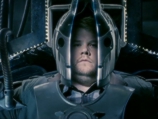 |
| Closing Time (2011) |
|
During a return visit to his old friend and 'landlord' Craig
Owens ("The Lodger") while travelling alone in preparation
for his ‘imminent’ death, The Doctor discovered
a dormant Cyber-ship that had crashed underneath London several
years ago, the ship having only recently been reactivated when
a shop was built over it that allowed them to draw on the power
of the electrical cables to repair their own systems. Establishing
a makeshift teleporter in a lift, the remaining Cybermen were
able to teleport down a few subjects for conversion, but the
resulting power drain attracted The Doctor and Craig's attention,
The Doctor discovering a passage down to the Cyber-ship that
he could use to confront them directly. Although the Cybermen
attempted to convert Craig into their new Cyber-Controller -
The Doctor's Time Lord biology being apparently incompatible,
most likely due to him possessing organic versions of some of
the components that would be added -, Craig's love for his son
Alfie allowed him to throw off the conversion process, The Doctor
using the distraction to trigger a feedback that caused the
remaining Cybermen, consisting only of spare parts and basic
components, to self-destruct ("Closing Time").
The Doctor faced the Cybermen again when he found himself in Klimtenburg, a nineteenth-century village stricken by a mysterious plague ("Plague of the Cybermen"). Although The Doctor attributed the plague to the villagers’ exposure to fragments from a Hapthoid reactor unit that had been destroyed in the area at some point in the recent past - most likely in the same accident that destroyed the local church -, a visit to a nearby castle and the local Lord and Lady Ernhardt confirmed that there was more going on when he learned that the local watchmaker - known only as the ‘Watchman’ - was making artificial limbs using Cybermen parts with clockwork interiors, the few active Cybermen using bodyparts stolen from local corpses to replace their own damaged limbs. Determining that the Cyber-ship had crashed during the ‘storm’ that destroyed the church, The Doctor and local teacher Olga were able to find the buried Cyber-ship, where they learned that it was recharging its power using lightning generated by the storms the ship was creating through atmospheric manipulation, having influenced the Watchman’s work through a Cyberman head he had recovered, the head giving him instructions for future projects; he had even rebuilt Lady Ernhardt into an android form when she was left very weak after giving birth to her son Victor, as well as converting Victor into a primarily cybernetic form. Although the Cybermen awoke when The Doctor and Olga found their ship, with Lady Ernhardt defending them, The Doctor was able to use Victor and the Oracle as conduits to channel a new surge of power into the Cyber-ship, overloading the cryogenic system and destroying all the active Cybermen. Although Victor was lost as well, Lord and Lady Ernhardt - who survived the damage she sustained in the fight - decided to remember their son for the time they had been able to spend with him, accepting The Doctor’s assurances that he had saved them all with his sacrifice.
 |
Everywhere and Anywhere
(Georgia Cook, Alfie Shaw and Max Kashevsky) |
|
Some time later, while travelling with new companion Valerie Lockwood, The Doctor faced the Cybermen once again when he discovered an unconventional invasion on the planet Alma. After a Cyberman ship crashed on Alma with only one survivor, this survivor was able to essentially infiltrate society by presenting itself as an agent of the planet's god, Unica, claiming that the Cyber-armour was actually a redemption suit provided by the Rebirth Organisation to heal the wearer of unnatural urges such as homosexual desires. These Cybermen were allowed to keep their original voices to encourage the idea that the redemption suits were temporary and people would emerge once they had been forgiven , with conversion taking place as they were teleported away and returned in a bright light that people assumed was part of Unica's intervention. The Cybermen even pretended that they retained their emotions, but The Doctor and Valerie recognised that they were just faking it; they both speculated that the Cybermen were only being subtle this time because they had initially lacked the numbers to use their usual methods. While Valerie tried to convince the potential converts that the redemption suits were a lie, The Doctor was able to track the original Cyber-leader, but when the Cybermen prepared to implement mass conversion The Doctor had to confront Robert McIntosh, the leader of the Rebirth Organisation, and his converted daughter Carmen during a live morning television broadcast. While The Doctor didn't like doing it, he was able to reveal the truth by disabling Carmen's emotional inhibitor, allowing her to denounce her father and tell The Doctor the location of the Cybermen control ship before the inhibitor was reactivated. The Cybermen attempted to force Valerie to help them convert her via her existing cybernetic implants by threatening to leave the others partially converted, but Valerie only allowed the Cybermen to go through with their threat so that she could infiltrate their systems with her existing anti-Cyber tech. While Valerie borrowed arms from fallen Cybermen to replace her own damaged limbs and release the current crop of potential converts, The Doctor set the Cyber-ship's engine to overload, ending this invasion.
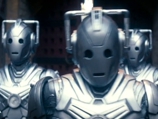 |
| Nightmare in Silver (2013) |
|
The Eleventh Doctor’s next encounter with the Cybermen ("Nightmare in Silver") began when he took his companion Clara - along with Angie and Artie, children that Clara looked after as a nanny - to Hedgewick’s World, the greatest amusement park in all of history created after the world was decimated by the Cyber-Wars - a massive war against rapidly-adapting Cybermen that apparently ended with their extinction after the Tiberian Galaxy was destroyed with them in it -, only to arrive after it had closed and was under military authority. When the park’s owner revealed that his exhibits included some damaged Cybermen, The Doctor was naturally concerned, being proven right when the Cybermen produced miniature Cybermats the size of insects (Referred to by The Doctor as Cybermites) to attack, taking control of Angie and Artie before an army of sleeker, deadlier Cybermen attacked, able to move at accelerated speeds, take themselves apart to take their opponents by surprise, and rapidly convert their victims. Tracking a Cybermite, The Doctor activated a portable transmat which took him to the Cyber-ship, revealing that the Cybermen had been stationed on Hedgewick’s World, abducting visitors for spare parts, to wait for children to create a new Cyber-Planner (Much like how the Daleks had used a child to coordinate the battle for the Hand of Omega ("Remembrance of the Daleks")), although they now intended to use The Doctor’s brain instead, Cyber-technology having developed to a point where they could convert The Doctor. Although infected with a cyber-implant, The Doctor was able to resist their attempt to take control of him, confronting the Cyber-Planner that sought to use his brain in a game of chess for control of his mind by threatening to regenerate if the Cyber-planner continued trying to take him over (The Doctor knowing that regeneration would burn out the Cyber-components but not wanting to risk it in the middle of a crisis), managing to buy further time by using a golden ticket to Hedgewick’s World to disrupt the older components of the Cyber-code. While Clara attempted to maintain control of the platoon to prevent them activating a planet-destroying bomb, this option was apparently taken off the table when the platoon’s captain was killed and the Cyber-Planner destroyed the detonator, leaving the platoon facing an army of Cybermen with limited weapons. Continuing his game with the Cyber-Planner, The Doctor rescued the children by making an emotional move to sacrifice his queen as part of a deal, the Cyber-Planner dismissing that move as pointless as the Cybermen continued to advance, only for The Doctor to inform the Cyber-Planner that he would achieve mate in three moves. As the Cyber-Planner shut down the other Cybermen to acquire the processing power necessary to calculate The Doctor’s future moves, The Doctor used an upgraded pulse weapon - a hand-held weapon that shorted out the Cybermens’ operating systems when used on them at close range - to disable the Cyber-Planner components on his body, purging the Cyber-Planner’s influence from him. With the children restored and the surviving soldiers in the room with them, Angie revealed that the dwarf, ‘Porridge’, that had been working with the platoon, was actually the emperor, giving him the authority to activate the bomb and transmat the crew - as well as the TARDIS - to safety on the Imperial Flagship as the planet was destroyed, ending the threat of the Cybermen.
 |
| The Time of The Doctor (2013) |
|
When tracking a mysterious signal being broadcast across the universe, The Doctor initially tracked it using a Cyberman head he acquired in a market, the head’s organic components all decayed away from old age ("The Time of The Doctor"). When he exiled himself to the planet Trenzalore to protect the last of the cracks in the universe ("The Eleventh Hour") created by the TARDIS exploding ("The Pandorica Opens/The
Big Bang") after learning that the crack was the source of the signal, which originated from the Time Lords calling forhelp from outside the universe, The Doctor’s only long-term companion was this head, which he nicknamed ‘Handles’. Handles eventually ‘died’ after three centuries, but The Doctor witnessed other Cybermen during his time on Trenzalore; one notable assault occurred when the Cybermen attempted to bypass the anti-technology barrier around Trenzalore by sending down a Cyberman made of wood armed with a flamethrower, but The Doctor was able to trick it into turning its own flamethrower on itself.
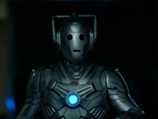 |
| Dark Water/Death in Heaven (2014) |
|
Some time after the Siege of Trenzalore had ended with The Doctor acquiring a new set of regenerations, the Twelfth Doctor found himself facing a new army of Cybermen that had been assembled with the aid of a new incarnation of The Master (This Master being a woman who called herself 'Missy' as a shortened form of 'Mistress' due to the obvious impracticality of her old name). Using an area referred to as the Nethersphere, a Matrix data slice taken from Gallifrey and concealed in London, the Cybermen abducted people from the moment of their deaths, presenting the Nethersphere as the afterlife where their 'souls' remained connected to their original bodies - prompting them to erase their own emotions to escape the fear and pain of feeling their bodies rot or be cremated - when in reality the victims' minds were downloaded into the Netherspehre and their bodies converted into Cybermen as The Master prepared their technology so that they could convert the dead as well as the living ("Dark Water/Death in Heaven"). Travelling to the Nethersphere while trying to find Danny Pink - Clara's boyfriend, who had recently died in a car accident - The Doctor and Clara discovered a room filled with tanks of an unidentified liquid and skeletons, the liquid being revealed to be a substance known as 'dark water' which saw through non-organic tissue. Although The Doctor expressed disbelief at the story behind the Nethersphere's origins, he failed to realise the truth before the Cybermen were activated as the dark water was drained from their tanks, followed by The Master revealing her true identity. Although The Doctor tried to coordinate UNIT's defence of Earth, The Master revealed that her true goal was to give The Doctor control of the resulting army, forcing him into the impossible position of accepting control of an army that could re-shape history or doing nothing and allowing Earth to be conquered. Although Danny was converted into a Cyberman, forcing The Doctor to deactivate his emotional inhibitor so that he could learn The Master's full plan, Danny's love for Clara proved powerful enough to override The Master's control, allowing him to take control of the army and use them to destroy the cloud of the dispersed Cybermen. The converted Brigadier was also in the area, but he only remained long enough to save his daughter Kate and eliminate The Master before destroying himself. (Although The Master was later revealed to have escaped ("The Magician's Apprentice/The Witch's Familiar").
While the scale of The Master's plan was exceptional, The Doctor's next encounter with the Cybermen was the most devastating confrontation with them he had ever faced, particularly since it only occurred because of his own mistake. After the Twelfth Doctor banished Rassilon from Gallifrey after discovering his lost planet ("Heaven Sent/Hell Bent"), Rassilon discovered the last of the Cybermen at the end of the universe, seeing in them the perfect means to expand Time Lord authority and achieve his revenge against The Doctor. With Rassilon's knowledge allowing them to convert a sizeable portion of Gallifrey, the Cybermen then used Time Lord resources to mount a massive attack on various eras in history, using such new weapons as a complex cybernetic networked mind or nanites that would automatically convert the infected into Cybermen. As The Doctor's past incarnations faced various Cyber-threats across history, the Twelfth Doctor learned what had happened and confronted Rassilon directly, learning that Rassilon intended to use the regenerative energy of the Time Lords he had captured to 'regenerate' the dying universe in his image. Although Rassilon believed that he was in control, The Doctor soon realised that the Cybermen intended to subvert the process and use Rassilon's equipment for themselves, using Rassilon's knowledge simply to disrupt his past selves' efforts to oppose them, such as disrupting the Ninth Doctor's TARDIS's connection to the Eye of Harmony before he could use it to destroy Earth or shutting down the Cyber-converted Silurians as the Eleventh Doctor tried to upload himself to the network to restore their emotions. Despite this, The Doctor and Rassilon were able to defeat the Cybermen when Rassilon tricked them into thinking that his mind had broken under the strain so that they would link The Doctor to act as the network's power source, allowing the two Time Lords to use their combined mental powers and the regenerative energy available to them to literally regenerate the universe, undoing the events of the Cybermens' attack so that only The Doctor (and possibly Rassilon) would remember what had happened.
 |
| World Enough and Time/The Doctor Falls (2017) |
|
When The Doctor next confronted the Cybermen, this encounter became particularly personal for several reasons, as not only was he dealing with the early Mondasian Cybermen, but as part of his current effort to help Missy reform, he was allowing her to ‘take point’ in dealing with this crisis, accompanied by The Doctor's current companions Bill Potts and Nardole, while he observed in the TARDIS ("World Enough and Time/The Doctor Falls"). Although they found a suitable crisis in the form of a ship trapped in a black hole and experiencing time dilation so that time passed at a faster rate on the lower levels than the upper, matters were immediately complicated when Bill was abducted by something from the rear of the ship after another member of the crew had destroyed her heart to try and stop her being detected by something that was hunting humans. The mysterious physician ‘Razor’ replaced her heart with a cybernetic implant, revealing that the lower levels of the ship had become a vast industrialised city that was killing the local population due to the failing life support systems. Time dilation meant that it took ten years for The Doctor, Missy and Nardole to work out what was going on and follow Bill, shocked to learn when they reached the lower levels that Bill had been converted into a Cyberman by Razor, who was none other than The Master, Missy’s immediate predecessor (The Master referred to this as the ‘genesis of the Cybermen’, but The Doctor simply noted that Cybermen would happen everywhere there was people, regarding them as an inevitable development in the form of parallel evolution across the universe, suggesting that there were multiple possible origins for the Cybermen rather than every version depicted originating from Mondas directly). As the converted Cybermen began to ascend through the colony ship, The Doctor, Nardole, and the two Masters fled to an upper level where the colonists were still human, accompanied by Bill as she had managed to hold onto her humanity despite the conversion. Although horrified at what she had become, to the extent that she told The Doctor she didn’t want to live in such a state, Bill helped The Doctor, Nardole and The Masters prepare defences for the colonists, even as the time dilation effect allowed the Cybermen in the lower levels to reach the level of development shown in the Dalek/Cyberman war ("Army of Ghosts/Doomsday") after only a few days, the Time Lords forced to remain on this level as they couldn’t go higher without the time dilation giving the Cybermen a chance to evolve further. Armed with advanced weapons and The Doctor’s own knowledge of the Cybermens’ predictability, the colonists were able to hold the Cybermen back long enough to give the colonists a chance to escape to an upper level with Nardole. Although The Masters literally stabbed each other in the back, The Doctor was able to destroy the Cybermen by triggering the fuel and power lines in the floor to explode and destroy the entire Cyber-army, Bill taking him back to the TARDIS so that he could regenerate later ("The Doctors") before she was transferred to a new level of existence as a result of her past contact with the Pilot, an entity that had absorbed the consciousness of her potential love interest Heather and formed a link with Bill while attempting to do the same to her.
 |
| The Haunting of Villa Diodat |
|
Some time after The Doctor's regeneration into the first female Doctor ("The Woman Who Fell to Earth"), the Thirteenth Doctor's companions Graham O'Brien, Ryan Sinclair and Yasmin Khan were temporarily 'abducted' by Captain Jack Harkness ("Fugitive of the Judoon"), who was trying to warn The Doctor about the 'Lone Cyberman', allegedly the last of a Cyber-empire in the far future. The companions passed on Jack's warning to The Doctor that she shouldn't give the Lone Cyberman what it wanted, but eventually the TARDIS crew encountered the Cyberman in question when visiting the Villa Diodati on the night that Mary Shelley wrote Frankenstein. Investigating mysterious events in the villa, The Doctor, Graham, Ryan and Yaz learned that the events were due to the presence of the Cyberium, a collection of Cyber-knowledge that had been sent back from the future to keep it away from the Cybermen in the future, only for the Cyberium to 'infect' Percy Shelley a few days before they arrived, subtly changing history to account for his absence from the party. The Cyberium was subsequently sought by Ashad, a partially-converted and badly damaged Cyberman who had come back from the future to retrieve the Cyberium, Ashad revealing himself to be a willing Cyber-recruit who was driven to go beyond traditional Cyberman limitations by his remaining emotions. The Doctor attempted to stop Ashad claiming the Cyberium by taking it onto herself, having telepathically prompted Percy to experience a vision of his future death to make the Cyberium think he was already dead, but when Ashad threatened to summon reinforcements, she was forced to surrender the Cyberium to Ashad.
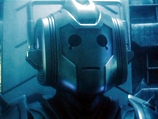 |
| Ascension of the Cybermen/The Timeless Children |
|
Tracking Ashad to the far future, the TARDIS crew found the last of humanity on the run from the Cybermen, who were hunting the human race almost to extinction ("Ascension of the Cybermen/The Timeless Children"). The Doctor attempted to help the human survivors defend themselves against the Cybermen by improving their available defences, but the TARDIS crew were separated when Graham and Yaz ended up on a ship with the last surviving humans while Ryan stayed with The Doctor after Ashad's latest attack. With Graham and Yaz's ship having made contact with a massive Cybercarrier containing thousands of dormant Cybermen, The Doctor was able to hijack a Cybership and trace a portal leading to the Boundary, which would allegedly take the humans to the other side of the universe away from the Cybermen, only to find that the portal opened onto Gallifrey, which had been left decimated by The Master. When the Cybercarrier followed The Doctor to the boundary, The Master made contact with Ashad to propose an alliance, becoming intrigued when Ashad revealed that he possessed the 'Death Particle', a small explosive energy that could theoretically destroy all organic life in the blast radius. The Master attempted to take control of the Cybermen for himself by killing Ashad and absorbing the Cyberium into himself, using his new knowledge from the Matrix to revive the corpses of the Time Lords he killed as Cybermen with the ability to regenerate when killed. However, The Doctor was able to retrieve Ashad's miniaturised body, with one of The Doctor's new allies detonating the death particle to spare The Doctor having to do it while The Doctor and her companions and allies departed in some of the remaining TARDISes.
When the universe faced the threat of the Flux, an anti-matter wave that destroyed most planets in the universe, the Cybermen were one of the main races who managed to benefit from the devastation, occupying several planets in the aftermath of the chaos. The crisis of the Flux came to an end when the Sontarans offered an alliance to the Daleks and the Cybermen where their fleets would take shelter from the Flux on Earth, which was protected by another fleet of ships with shields specially configured to deflect the energies of the Flux. However, the Sontarans betrayed the Daleks and the Cybermen by configuring the shields to materialise behind the Dalek and Cybermen fleets, with the idea of using the Dalek and Cybermen fleets to essentially 'wear out' the Flux to stop it. Both fleets were apparently destroyed, but The Doctor and her allies were able to reconfigure the anti-Flux shield so that the Sontarans were unprotected by it as well, the Sontarans' destruction slowing the Flux long enough for The Doctor to disable it at its source and undo most of the destruction it had caused.
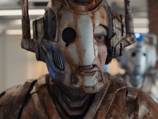 |
| The Power of The Doctor |
|
The Cybermen returned in the form of the Cyber-Masters from Gallifrey when The Master sent them to retrieve the Qurunux - a form of sentient energy - to serve as a power source for an artificial planetoid in 1916. Working with the Daleks to ensure The Doctor's final defeat, The Master used the planetoid to force a regeneration on The Doctor so that she would regenerate into a copy of The Master himself, intending for this new Doctor/Master to corrupt and destroy everything The Doctor stood for. On top of this, The Master was able to smuggle a Cyber-division into UNIT headquarters, allowing them to start converting the UNIT soldiers into more Cybermen while the Daleks set out to destroy Earth. However, anticipating a significant upcoming threat, The Doctor had earlier created an interactive hologram of herself to communicate with key companions, allowing the companions to devise a plan where they would trick the Cyber-Masters into shooting at themselves, triggering several regenerations that could be channelled back into The Master's equipment to undo the unstable forced regeneration and return The Doctor to her usual self. With the Cyber-Masters having been drained of the ability to regenerate, the holographic Doctor was able to advise Tegan Jovanka (who had been visiting UNIT HQ when the attack began) on how to overload the Cyber-conversion equipment on Earth, destroying the base and the Cybermen within it while giving Tegan and other survivors time to get out as the Cybermen were incinerated by their own power, leaving the Daleks to be destroyed by The Doctor and her allies.
|