|
|
 |
|
The
Second Doctor
(1966 - 1969, 1983 & 1985) |
|
|
|
|
|
|
The
Sound Vault |
|
 |
|
 |
|
| Zoe |
|
|
The Best Doctor
|
| |
| Vote
if I am your favourite Doctor |
|
|
|
|
|
| |
 After
the Doctor's health deteriorates while in the cold environment
of the South Pole that the TARDIS has
taken them to the Doctor, on returning to the TARDIS, collapses
and then before his companions
very eyes he regenerated into a much younger and dark haired
man ("The
Tenth Planet"). After
the Doctor's health deteriorates while in the cold environment
of the South Pole that the TARDIS has
taken them to the Doctor, on returning to the TARDIS, collapses
and then before his companions
very eyes he regenerated into a much younger and dark haired
man ("The
Tenth Planet").
 |
| The Power of the Daleks |
|
To
his two companions this was not only a complete shock but also
something that could not be possible unless this strange person is
an impostor who has managed to enter the TARDIS. As Ben and Polly tried
to challenge The Doctor they became more and more confused and sceptical,
doubting whether the man before them was the genuine
Doctor. 'Life depends on change and renewal' The Doctor comments
(Although his habit of referring to The Doctor as a separate person
at first did little to encourage the idea that he was still the same
man). However, they are finally convinced that this 'stranger' is
indeed The Doctor when a Dalek recognises
him for who he is. This forces Ben to admit 'Well, if a Dalek takes
you for the proper Doctor then
I suppose I can' ("The
Power of the Daleks"). Although
some uncertainty remained regarding the new Doctor - with Ben once
commenting that
he wasn’t sure the new Doctor was ‘all there’ sometimes
- he proved himself time and again to be just as capable as his
previous
self in fighting the evils of the universe.
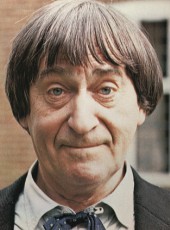
Patrick
Troughton played the part as a cross between Charlie Chaplin and
the Pied Piper and was described by his first incarnation, when he
meets him in a much later story, as a 'clown'. Significantly, he
is the only Doctor whose clothing does not significantly differ from
his previous incarnation, his favoured wardrobe being simply a larger,
slightly baggier version of the First Doctor’s chosen garb,
with the trousers now clownishly large and his cravat being replaced
with a commonly poorly-tied bow tie. He still had a keen mind and
sense of righting wrongs and he still managed to become entangled
in the affairs of others, admitting to his companion Jamie that ‘I
do tend to get involved with things’ (A marked contrast to
his first self’s initial reluctance to get involved in the
crises he found himself discovering as he travelled around in the
TARDIS). His relationship with his companions was also altered, his predecessor’s role as a wise old guardian switching to a kind of ‘favourite uncle’ figure, with the Second Doctor still old enough to exert authority but preferring to be a figure of warmth and fun rather than his first self’s status as a stern disciplinarian.
 |
| The Moonbase |
|
However,
his brilliant intellect and powers of observation would be hidden
beneath his clown like façade and his tomfoolery made his
enemies underestimate his abilities and motives, his apparent incompetence and ignorance putting his enemies off-guard until he was ready to confront them. When he met other versions of himself, the Second Doctor’s clownish attitude was so perfect that even his future selves underestimated
him, with the Third
Doctor once commenting that the Second Doctor’s
presence was more of a hindrance than a help ("The
Three Doctors"),
although the Seventh later described him as simply being more curious
and prone to improvise rather than actually coming up with plans,
encouraging his younger self to explore more detailed plans without
actually condemning his traditional methods ("The
Colony of Lies"). The Doctor’s childishness is well demonstrated
when The Doctor ends up playing games with three playful Daleks who
have been given 'The Human Factor'. However, when the Daleks’ true
plans are revealed - to isolate the ‘Dalek Factor’ and
spread it to humanity throughout history via the TARDIS - he tricks
them into giving more Daleks the 'Human Factor' who then rebel
against the Emperor Dalek ("The
Evil of the Daleks").
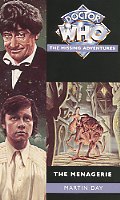
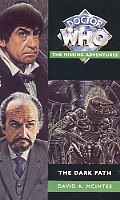
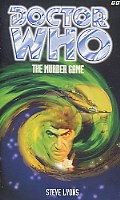
His manipulation of the Daleks into civil war reflected this Doctor's darker potential; while he preferred to find a peaceful resolution where possible, he was not above resorting to more ruthless methods when the situation required it, such as electrifying the doors of the Cybermens' tomb on Telos ("The Tomb of the Cybermen") or tricking a fleet of Ice Warriors into travelling directly into Earth's sun ("The Seeds of Death"). However he was commonly a light-hearted man; at moments of stress he had a habit of producing a recorder and playing a jaunty little tune - although only he thought that he was any good with the instrument, with others finding this habit to be particularly frustrating - or even occasionally dancing to a little jig. Despite this light-heartedness, he was unable to hide his true feelings when facing serious issues, clearly saddened at Victoria's departure from the TARDIS even as he recognised why she was leaving ("Fury From the Deep"), as well as expressing great indignation when he learned that his old friends the Menoptera had been enslaved ("Twilight of the Gods") and arguing with his old friend Koschei about the use of the time-changing Darkheart, which would allow Koschei to eliminate conflict at the cost of freedom ("The Dark Path"). He was also very modest much preferring to slip away quietly and unnoticed at the end of a story so as not to be caught up with the embarrassment of farewells or the answering of awkward questions. 'Why did you rush us back here for?' Zoe questions, on returning to the TARDIS after defeating the Ice Warriors attempt to invade Earth. For which The Doctor replies 'Well you know questions, explanations. It's very difficult. Come on.' ("The Seeds of Death"). In contrast to his desire to avoid the spotlight, he enjoyed chances to explore and have fun, being far more light-hearted than his past self, sometimes donning such bizarre disguises as secretary Lucy Buxom while in a role-playing game ("The Murder Game") or a gypsy-like musician in Atlantis ("The Underwater Menace") simply for the fun of it rather than any more practical purpose.
 |
| The Web of Fear |
|
A continued theme at this time from the First Doctor’s era
was The Doctor’s inability to control the TARDIS, made evident
on such occasions as The Doctor’s claim to be taking the ship
to Mars ("The Underwater Menace") resulting in the TARDIS
arriving on the moon ("The
Moonbase"). On one occasion
The Doctor claimed that this was the result of security measures
installed by his people rather than his own inability to control
the ship - the measures preventing a thief from taking the TARDIS
wherever he wanted to go rather than preventing him from taking it
in the first place - but his attempt to remove these protocols resulted
in him ‘crash-landing’ the TARDIS in a pocket dimension
containing a small American town ("Heart
of TARDIS"), suggesting
that his own lack of expertise played its part at this time. While
he was able to control its flight on rare occasions, these were only
under exceptional circumstances when following a powerful signal,
such as when tracking a message sent from the space hotel Galaxian
("The Murder Game") or when he took a bomb directly to
the heart of the resurrected Animus ("Twilight
of the Gods"),
both occasions requiring him to disable the TARDIS temporal circuits
and more than a few of its traditional safeguards in order to be
certain of tracking the signal.
Unlike
many other Doctors, who always retained at least an appearance
of control even when faced with imminent death, the Second Doctor
was the only Doctor known to actually show fear to his enemies,
seemingly
genuinely afraid when the Cybermen he
encountered on Telos attempted to drag him back into their tomb as
he fought to escape, and prone
to the occasional moment of nervous chatter when faced with such
ruthless foes as the Selachians ("The
Murder Game"), or even a
simple human mob (Albeit one under the control of an unknown intelligence)
("Heart of TARDIS"). Despite
this, his resolve to fight the evil he encountered remained a dominant
part of his character, stating more than once that evil 'must
be fought' regardless of the cost to himself; when his traumatised
companion Jamie believed that The Doctor was an android duplicate
created to trick Jamie after the death of the ‘real’ Doctor,
it was seeing The Doctor fighting the evil Captain Taylor that confirmed
for him that The Doctor was real. He was also able to use his tomfoolery
to bluff his way out of danger, such as in the "The Seeds of
Death" when cornered by two Ice Warriors, who are about to
shoot him, he announces in desperation 'Your leader will be angry if you kill me. I'm a genius!' Although flustered when put on the spot or facing others who couldn't accept his efforts, such as Dastari's conviction that the Time Lords wanted to suppress potential rivals ("The Two Doctors") or the Selachian leader's inability to consider peace with air-breathers ("The Final Sanction"), he retained a knack for diplomacy and relating to others when calm, which was particularly useful in allowing him to trick foes such as the Daleks ("The Evil of the Daleks"), the Great Intelligence ("The Web of Fear"), the War Chief ("The War Games") and the Countess ("World Game") into believing that he was going along with their plans when he really intended to turn on them and defeat them.
 |
| The Space Pirates |
|
As
was the case with the First Doctor's era his exact origins
were still never revealed, and only once does The Doctor mention
his family and even then very vaguely. As he tells Victoria,
who is still upset about the death of her father by the Daleks,
that he can still remember his family 'I have to really want
to, to bring them back in front of my eyes - the rest of the
time they sleep in my mind and I forget. And so will you'
("The
Tomb of the Cybermen"). This scene with Victoria
also demonstrates The Doctor's caring nature and his desire
for the well being of his companions, with Victoria in particular being regarded as a daughter figure while Jamie was a combination of son and brother, serving as someone who could protect The Doctor and be educated by him. This bond was generally
reciprocated by his friends, Jamie in particular showing a
great devotion to The Doctor as they travelled together; on
one occasion when The Doctor was presumed dead, Jamie briefly
became suicidally insane due to his guilt and grief over the
loss of his mentor, but he recovered after he witnessed The Doctor alive again and confirmed that he was real ("The Indestructible Man""), Jamie later consoling himself when he was trapped on an Earth ship and regarded as a traitor by both humans and their enemies by reminding himself that he had only done what The Doctor would have done by trying to prevent death on both sides ("The Final Sanction").
However, despite The Doctor’s desire for secrecy, the details of The Doctors true background were finally revealed
during Patrick Troughton's last story "The
War Games".
After defeating an alien race, who have been using human soldiers
from different war periods, The Doctor is forced to call upon the
help of his own race 'The Time Lords' so as to return the soldiers
back to their respective time zones. Fearing them immensely he
manages to return to the TARDIS, along with companions Jamie and
Zoe, but they find themselves trapped and so The Doctor ends up
on trial for all the meddling he has done.
Although
The Doctor was initially sentenced to death - with Jamie and Zoe being sent back to their own times with all memory of their travels with The Doctor erased - he was able to to earn a reprieve
by working for the Celestial Intervention Agency for a time,
helping the Time Lords deal with situations where they couldn’t
become involved due to their need to maintain a ‘hands-off’ policy
in the affairs of the universe. On the first of these missions,
The Doctor was granted access to new means of time travel,
such as a Time Ring or a new, updated TARDIS, but on both
occasions he stated his preference for his old ship and was
eventually allowed to use it again, albeit with a recall circuit
built in to recall the TARDIS to Gallifrey. His first such mission pitted him against the mysterious Players ("World
Game") - the stress of the adventure causing The
Doctor’s hair to turn grey for the rest of his second
life and resulting in the death of his new companion Serena. He was later able to negotiate for Jamie to be returned to him for a time with some of his memories restored, and the two travelled together once more, despite such threats as The Doctor being captured and nearly transformed into an Androgum -
which he only escaped thanks to some assistance from the Sixth
Doctor. Despite his service, the Second Doctor eventually finished his time with the CIA and was forced to begin his new sentence as he was made to regenerate and exiled to Earth, his knowledge on how to operate the TARDIS erased.
|




 BOOK
BOOK